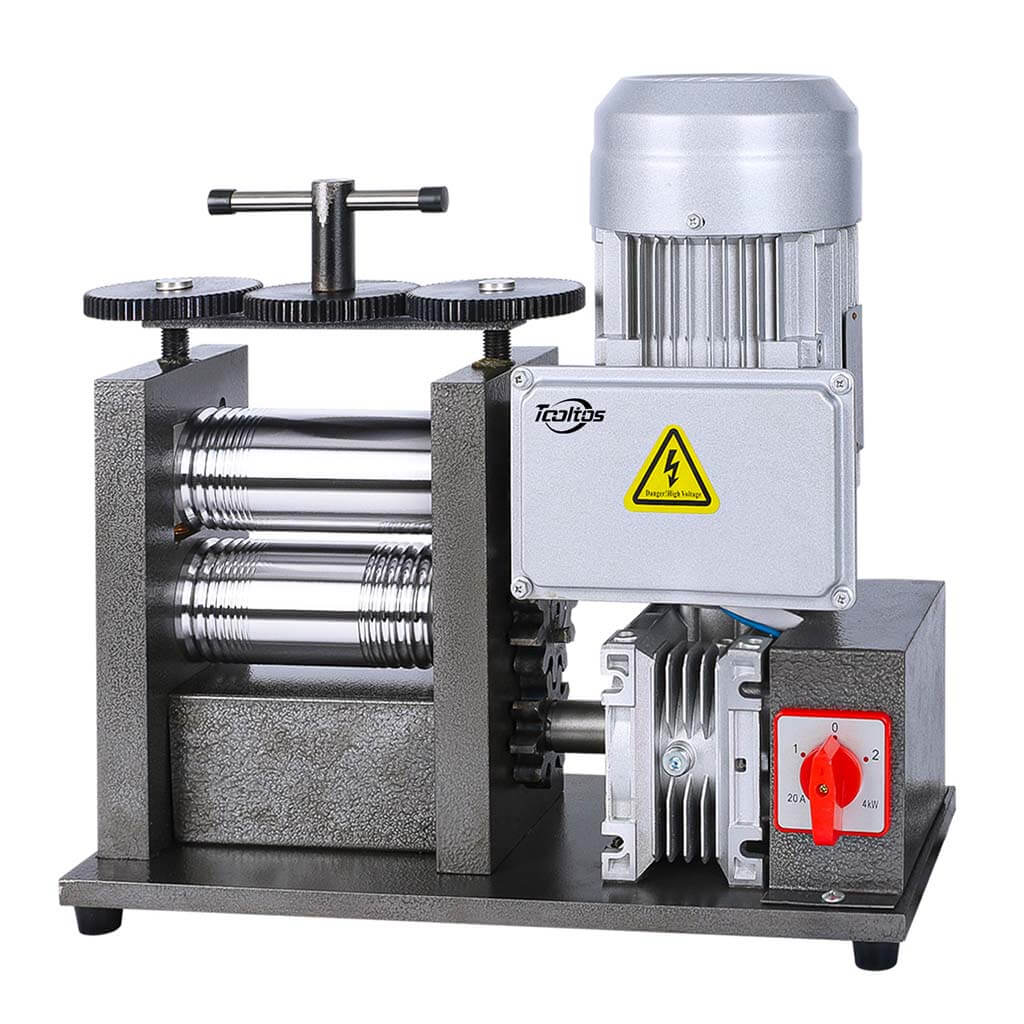
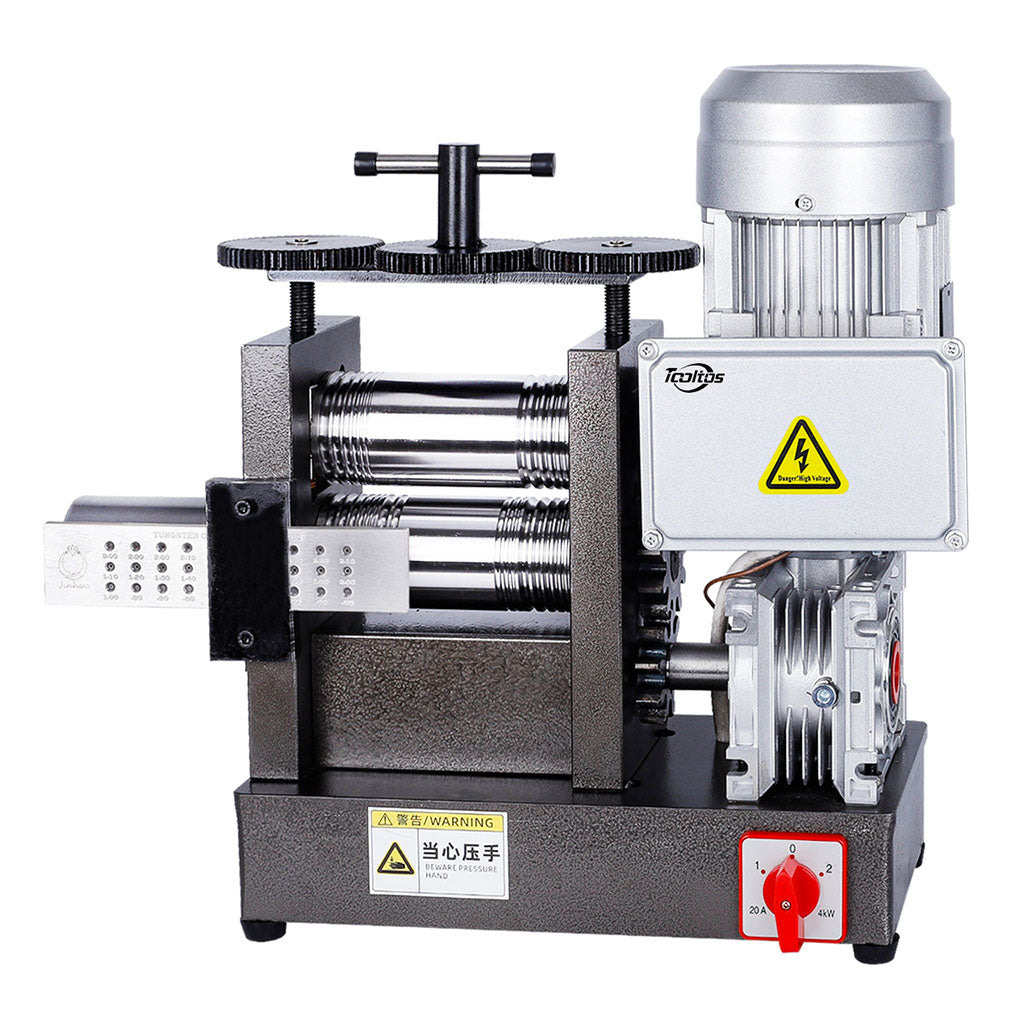
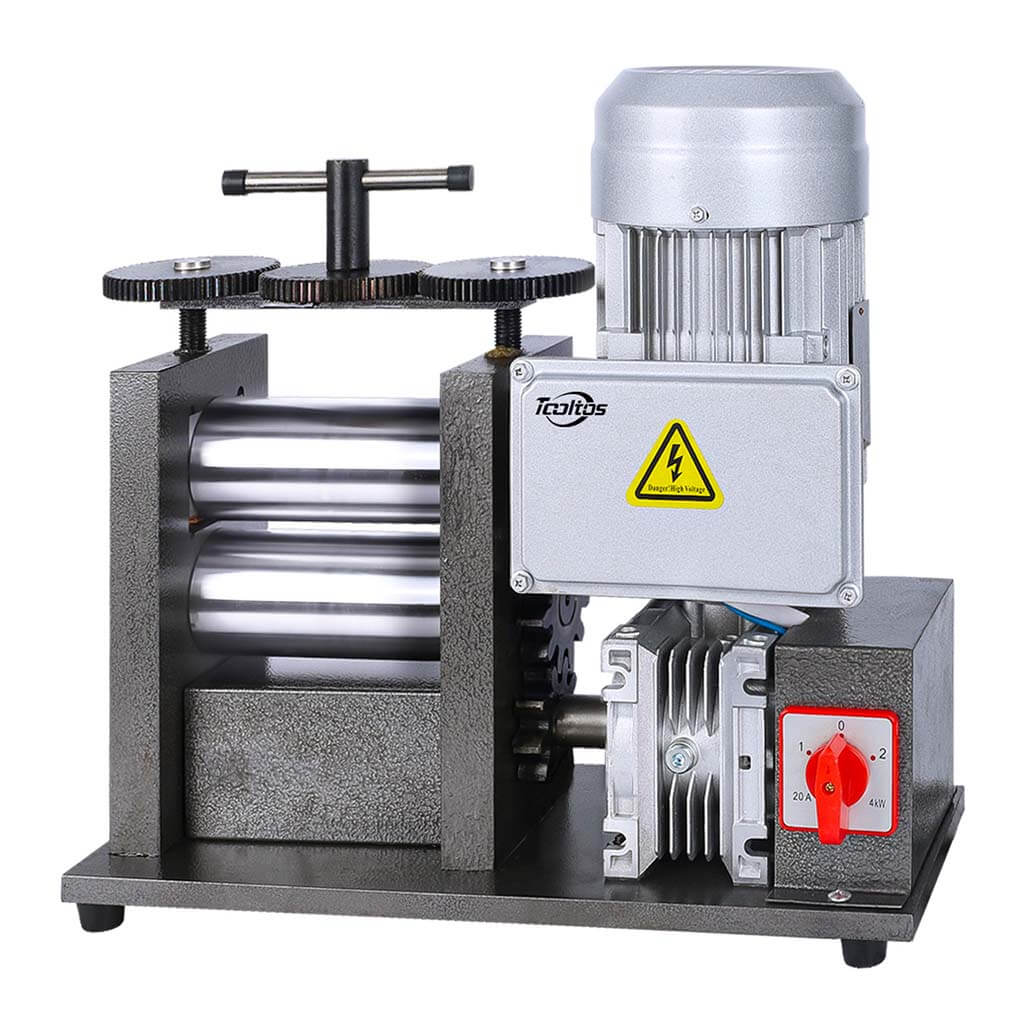
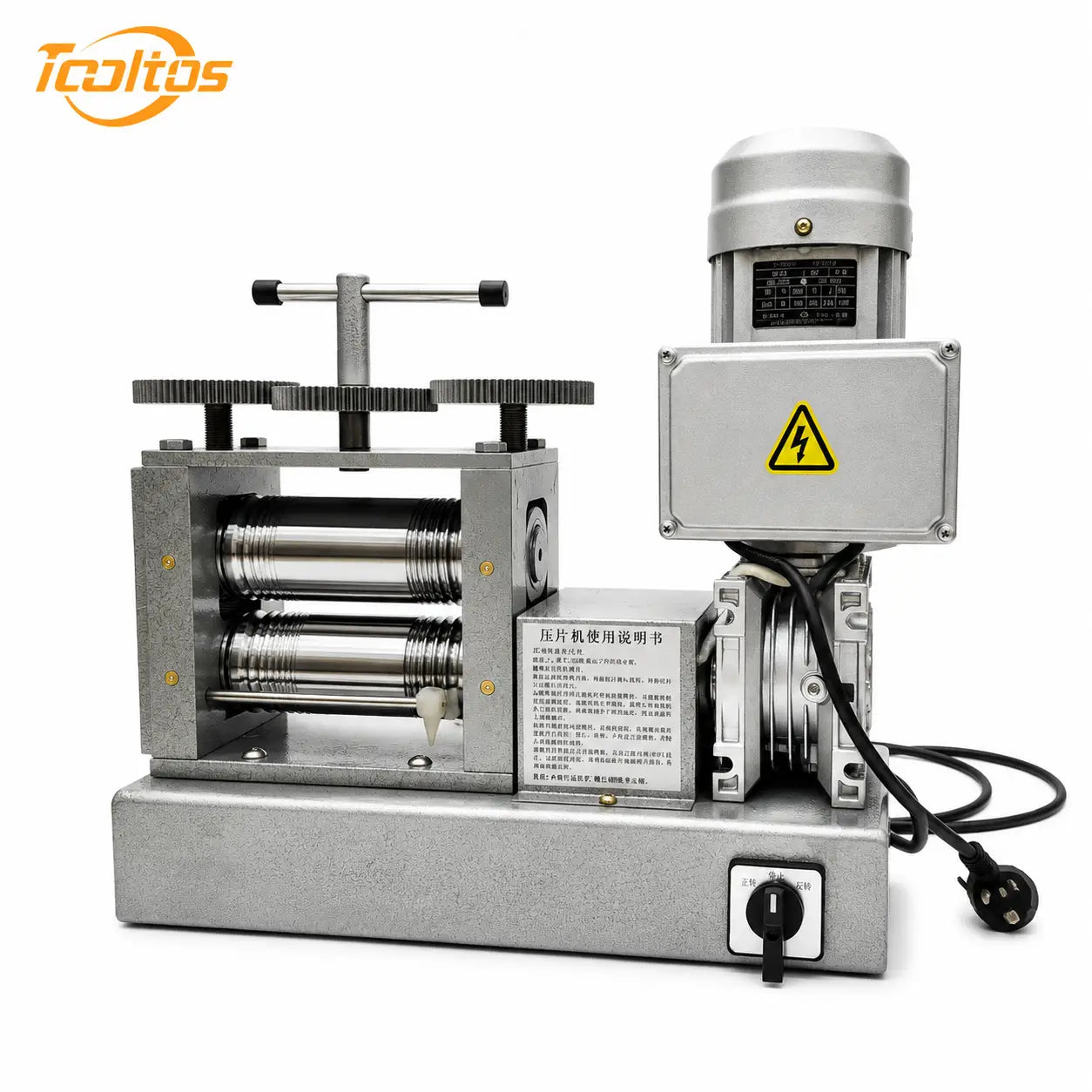
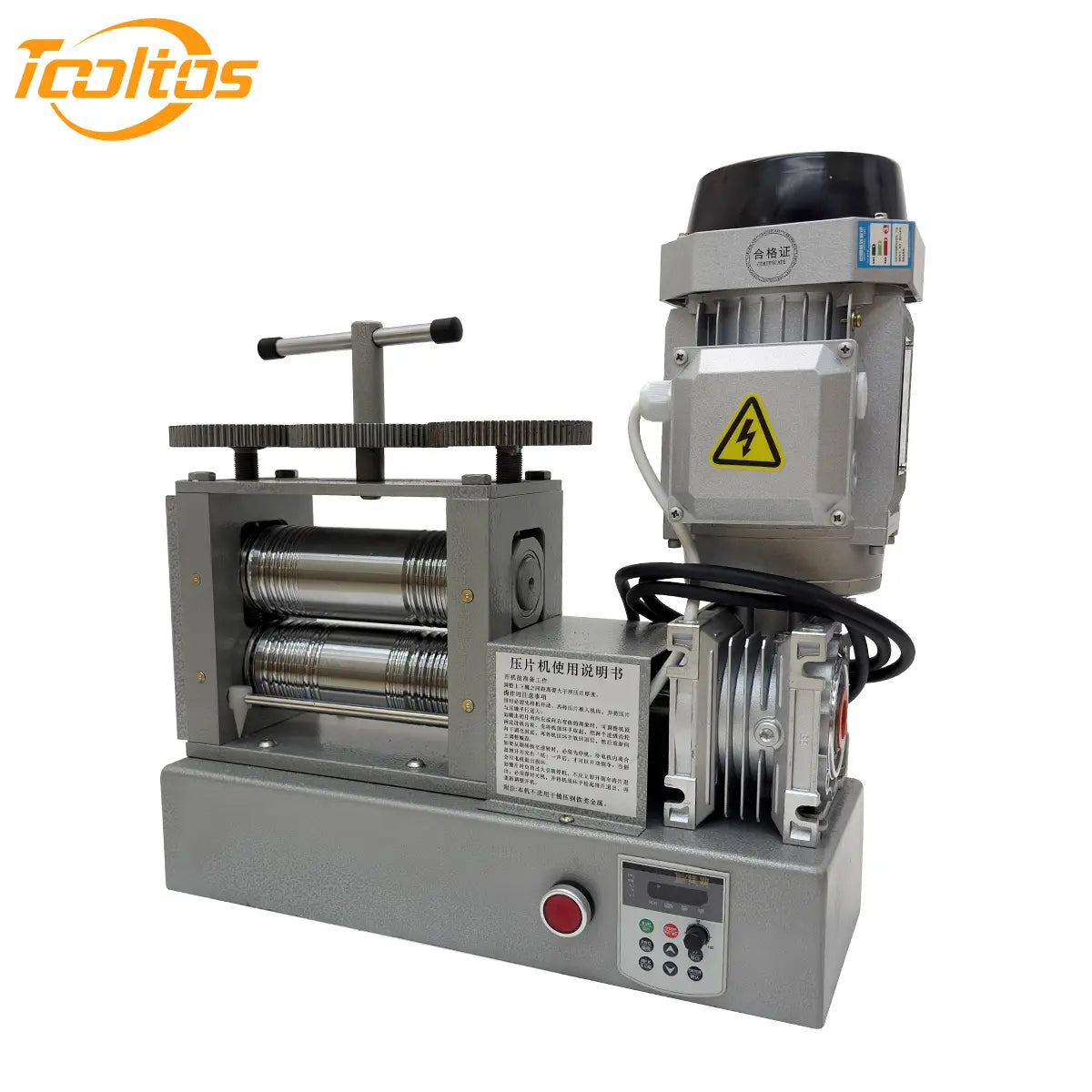
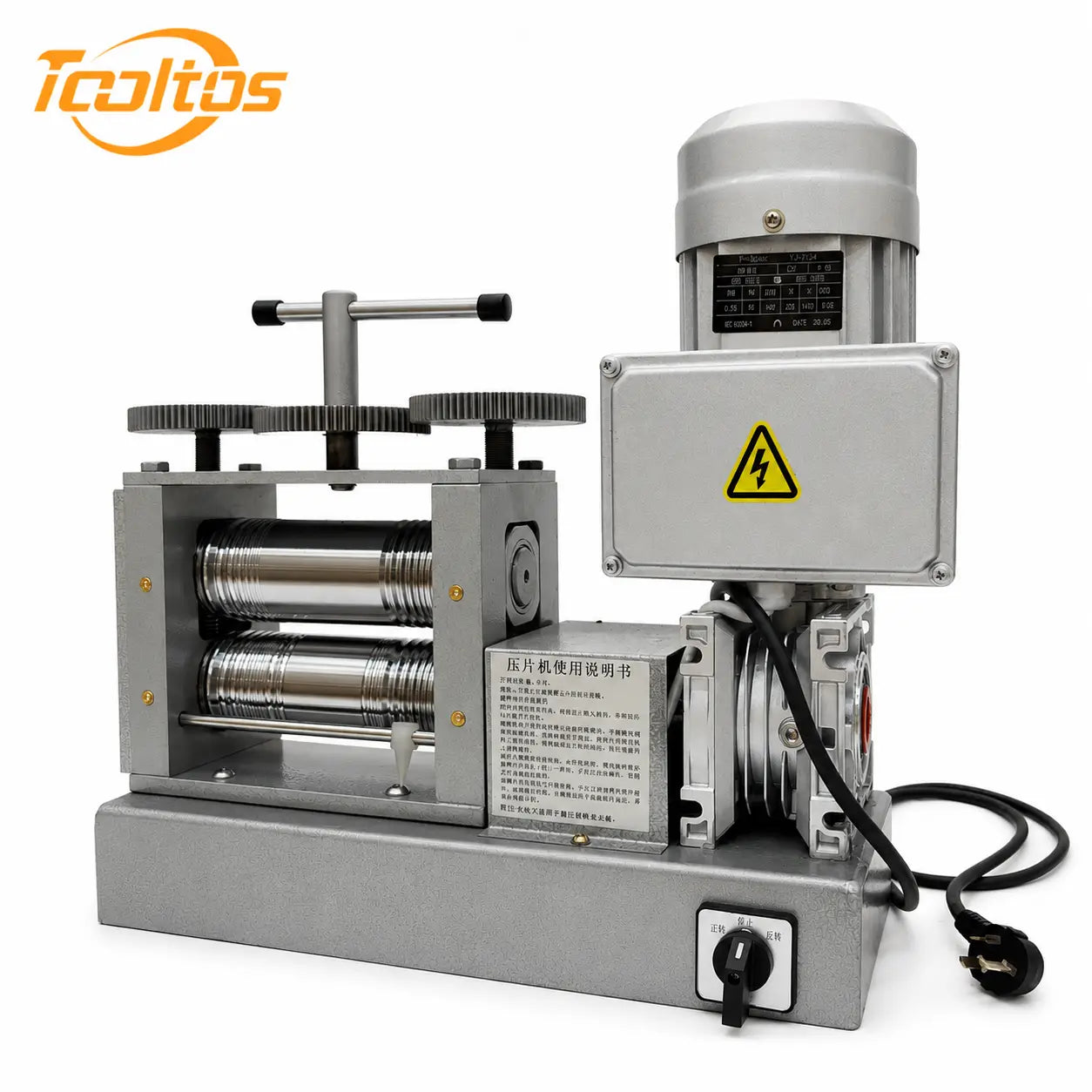
Electric Jewelry Rolling Mills for Sheet and Wire Work
Tooltos electric jewelry rolling mills are designed for jewelers, goldsmiths, silversmiths, jewelry schools and small production studios that need faster, more consistent metal forming than manual rolling mills. These motor-driven rolling mills help reduce hand effort while supporting sheet metal reduction, wire shaping, texture rolling and jewelry fabrication workflows.
Choose from 3-in-1 electric rolling mills, 4-in-1 combination models, flat-area rolling mills and electric rolling mills with square drawplates. Electric models are a practical upgrade for studios that frequently roll gold, silver, copper and other suitable soft jewelry alloys.
Looking for a more budget-friendly option? View our manual jewelry rolling mills.
Compare Tooltos Electric Jewelry Rolling Mills
| Model Type |
Best For |
Functions |
Key Advantage |
| 3-in-1 Electric Rolling Mill |
Small studios needing sheet, wire and pattern work in one machine |
Flat rolling, wire rolling and pattern rolling |
Balanced electric option for everyday jewelry metal forming |
| 4-in-1 Electric Rolling Mill |
Studios needing more forming options in one compact machine |
Flat, wire, pattern and additional groove rolling functions |
More versatile than a basic electric rolling mill |
| 120/160mm Flat-Area Electric Rolling Mill |
Users focused on sheet metal thickness reduction and flat rolling work |
Motor-driven flat rolling for sheet metal |
Best for users who mainly roll sheet rather than texture or wire |
| 160mm Combination Rolling Mill with Square Drawplate |
Goldsmiths and studios needing rolling plus wire drawing capability |
Flat rolling, wire rolling and square drawplate work |
Combines rolling and drawing functions for a fuller metal forming workflow |
Which Electric Jewelry Rolling Mill Should You Choose?
-
Choose a 3-in-1 electric rolling mill if you need one machine for sheet metal, wire shaping and texture or pattern work.
-
Choose a 4-in-1 electric rolling mill if you want more forming options and a more versatile machine for daily studio use.
-
Choose a flat-area electric rolling mill if your main job is reducing sheet metal thickness and preparing flat stock.
-
Choose a 160mm combination rolling mill with square drawplate if you need both electric rolling and wire drawing functions in one workflow.
-
Choose an electric model instead of a manual rolling mill if you roll metal frequently, need better repeatability or want to reduce hand effort during production.
Electric Jewelry Rolling Mill FAQ
What is an electric jewelry rolling mill used for?
An electric jewelry rolling mill is used to reduce metal thickness, shape wire, create textures and prepare sheet or wire stock for jewelry making. It is commonly used by jewelers, goldsmiths, silversmiths, jewelry schools and small production studios.
What is the difference between a manual and electric jewelry rolling mill?
A manual rolling mill is hand-operated and more economical for occasional use. An electric rolling mill is motor-driven, reduces physical effort and is better for frequent rolling, repeat production and small studio workflows.
Should I choose a 3-in-1 or 4-in-1 electric rolling mill?
Choose a 3-in-1 model for flat, wire and pattern rolling. Choose a 4-in-1 model if you need more groove or forming options in one machine.
What is a flat-area electric rolling mill best for?
A flat-area electric rolling mill is best for reducing the thickness of sheet metal and preparing flat stock. It is a good choice if you mainly work with sheet rather than wire or texture patterns.
What is the benefit of a rolling mill with a square drawplate?
A rolling mill with a square drawplate supports wire drawing or square wire forming, giving goldsmiths more flexibility for wire preparation and metal forming workflows.
Can an electric rolling mill roll gold, silver and copper?
Yes. Electric jewelry rolling mills are commonly used with soft jewelry metals such as gold, silver, copper and suitable jewelry alloys. Proper annealing is important to reduce stress and prevent cracking.
Do I need to anneal metal before rolling?
In most jewelry fabrication workflows, annealing is recommended before rolling. Annealing softens the metal, makes rolling easier and helps reduce the risk of cracking.
Which roller width should I choose?
Choose a standard roller width for compact studio work. Choose a wider 160mm rolling mill if you need more working surface for larger sheet metal or broader fabrication projects.
Is an electric rolling mill suitable for beginners?
Yes, but beginners should learn safe rolling practices, proper annealing and gradual thickness reduction. For occasional use and lower budget, a manual rolling mill may also be a good starting point.
How should I maintain an electric jewelry rolling mill?
Keep rollers clean and dry, avoid rolling dirty or overly hard materials, use proper lubrication where required, protect the machine from moisture and follow the manual for motor and gear maintenance.