

Broken ring repair at home is possible only in limited cases. A slightly out-of-round plain metal band may only need gentle reshaping. A true break needs the ends joined and usually requires jewelry soldering or welding skills. Do not treat glue as a structural repair for a ring that will be worn.
Do only work that you can inspect and control. If the ring is valuable, stone-set, hollow, plated, thin, badly distorted, or made of unknown metal, take it to a qualified jeweler.
Quick Answer Can You Repair the Ring at Home?
- Slightly bent plain band: Gentle reshaping may be suitable if there are no cracks, stones, or delicate areas.
- Cracked or broken band: Joining the metal is a skilled workshop repair, not routine home care.
- Valuable or delicate ring: Stop and consult a qualified jeweler first.
Your Repair Decision Path
Inspect the damage → Identify the repair limits → Choose home care or professional service → Check before wearing
Step 1 Check Whether the Ring Is Bent or Actually Broken
If the band is continuous but oval, flattened, or mildly bent, it may be a reshaping job. A gap, crack, split seam, loose setting, or detached decorative section is a structural repair problem.
Take photos before doing anything. Record a metal stamp, but do not identify a repair method by color alone.
Step 2 Reshape a Plain Ring That Is Only Out of Round
Check Suitability Before Applying Pressure
This step is for a solid, plain band without stones, cracks, plating concerns, or thin areas. Check the approximate size. Place the ring on a metal mandrel, then use a rubber mallet with light, even taps while rotating the ring. Stop often to check the circle.
Use Measuring and Reshaping Tools for Different Jobs
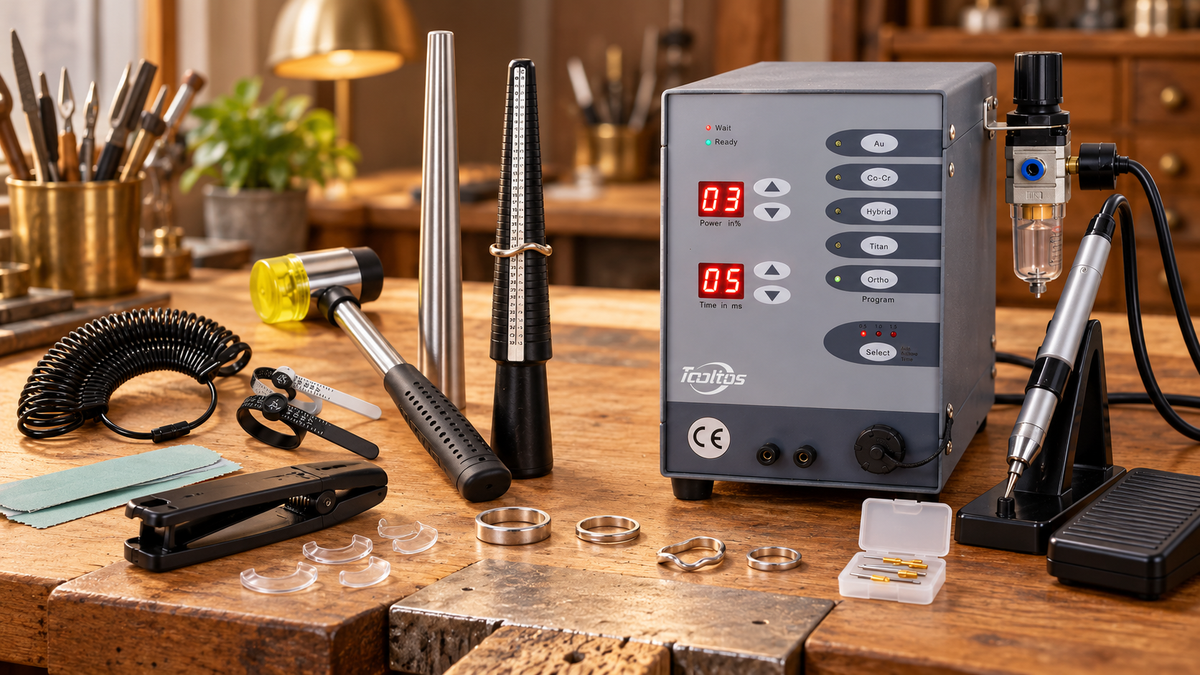
The Tooltos 20 Piece Ring Sizer Kit with Mandrel, Mallet and Adjusters includes a metal mandrel, rubber mallet, sizing tools, burnisher, and polishing accessories for basic measuring and gentle reshaping. It is for light restoration, not forcing a damaged ring into shape. Use the plastic mandrel to check approximate ring size and the metal mandrel to support reshaping.
Stop Signs During Reshaping
Stop if the ring develops a crack, resists light tapping, flakes, or a setting shifts. More force can turn a repairable ring into a harder repair.
Step 3 Decide Whether You Can Join a Real Break
Know the Skill Boundary
For a low-value, plain, solid ring with a clean break, a capable maker may rejoin the band with the correct repair process, secure holding, cleanup tools, and safe practice. The ends must fit and align before joining. Afterward, the ring needs shaping, finishing, and seam inspection. If you do not already have suitable jewelry repair experience, arrange professional repair rather than learning on the damaged ring.
A Workshop Tool Is Not a Home Repair Shortcut
For a workshop repair route, the Tooltos CNC Pulse Argon Arc Spot Welder is listed for ring repair and ring resizing. Its adjustable pulse control is intended for precision jewelry work. Test on matching scrap first; for gold and silver, Tooltos recommends argon for cleaner welds, and the argon tank is not included. Follow the machine instructions and use appropriate welding eye protection.
This is not a job for household glue, a general-purpose soldering iron, or force with pliers. Glue is not a durable wearable repair. Keep broken pieces together in a secure container for transport rather than attempting to glue the break.
Heat Repair Warning
Do not attempt home heat repair on stone-set, plated, hollow, very thin, oxidized or coated, unknown-metal rings, or breaks close to settings. Heat can damage stones, adhesives, finishes, and thin sections. Do not make a valued ring your first welding project.
Step 4 Check the Result Before Wearing
After reshaping, check the ring for uneven areas, new cracks, and sharp edges. After a joined repair, inspect the seam from both sides with light handling. Do not pull, twist, or flex the repair to prove strength. A visual check alone cannot confirm the strength of a repaired joint.
If the ring feels rough, no longer fits, shows an opening, or has a loose stone, stop wearing it and arrange professional repair.
Send These Rings to a Jeweler First
- Rings with diamonds, gemstones, pearls, or glued settings.
- Hollow, plated, engraved, antique, or sentimental rings.
- Rings with multiple cracks, a thin shank, a failed old repair, or a break near a setting.
- Rings made from unknown metal or with special finishes.
- Any ring you cannot reshape with light, controlled pressure.
Prepare for the Repair Consultation
- Keep the ring and any loose parts together in a secure container.
- Bring clear photos of the damage and any metal stamp.
- Explain what happened and whether the ring has been repaired or adjusted before.
Final Recommendation
Home care is most realistic for a mildly bent plain band. Joining a truly broken ring is a workshop repair task for a practiced maker, not routine home maintenance. If there is any doubt, protect the ring and loose parts, then take them to a repair professional with clear photos.
Contact Tooltos
For questions about the ring sizing tools or welding equipment featured in this guide, contact the Tooltos team at sales@tooltos.com.

0 comments