

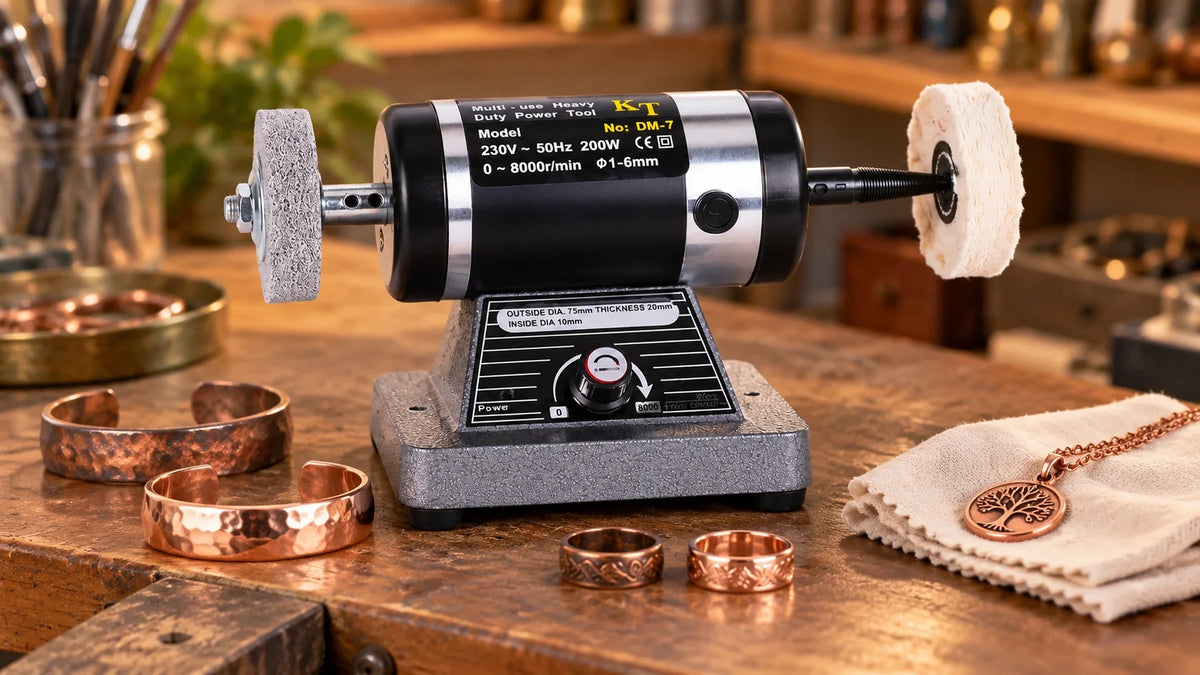
Copper jewelry changes color as the metal reacts with its environment. The goal is to slow unwanted tarnish, restore the surface carefully, and choose protection for the actual piece.
The Short Answer
Keep copper jewelry clean and dry, reduce exposure to cosmetics and household chemicals, and preserve the finish it was designed to have. Polishing restores a surface; it does not replace daily care. Test any clear coating before committing to a finished piece.
Start with the Finish You Want to Keep
Before cleaning, decide whether the piece is meant to be bright, aged, darkened, textured, or plated. Aggressive polishing can remove patina, texture, and thin finishes. Test an inconspicuous area first if it includes stones, glued components, enamel, resin, or an unknown coating.
For light surface tarnish on plain copper jewelry, use the mildest suitable method. Remove skin oils and residue, then dry the piece completely. Do not store a damp item in a closed bag or box.
Three Finishes, Three Different Decisions
- Bright plain copper: Decide whether gentle cleaning is enough before moving to polishing.
- Intentional patina or texture: Preserve the designed surface rather than treating every dark area as a defect.
- Plated, coated, or mixed-material jewelry: Check the existing finish and components before choosing a cleaning or restoration method.
Dry Storage Matters as Much as Cleaning
Copper tarnishes faster when exposed to moisture, cosmetics, fragrance, household chemicals, or other reactive metals. Put jewelry on after personal-care products have dried. Remove it before swimming, showering, exercise, or cleaning.
After wearing, wipe the piece with a soft dry cloth. Store it separately only when it is clean and dry. These habits reduce repeated exposure that speeds tarnish.
Before Wear and After Wear
Before wear: Let personal-care products dry before putting jewelry on. After wear: Wipe away residue, check that the piece is completely dry, and store it separately.
Use a Suitable Bench Polisher for Controlled Restoration
When tarnish develops, remove surface residue first. Decide whether the color change is surface tarnish or intentional, then work slowly and inspect frequently.
Tooltos DM-7 Bench Polishing Machine is a practical option for controlled manual polishing of plain copper pieces. Its 0–8000RPM variable-speed control and dual spindles support separate finishing stages. Choose wheels and compound for the material and finish, start conservatively, and increase speed only as needed. Wheels and compound are selected separately.
The DM-7 is not a shortcut for every copper item. High-brightness polishing is not right for every textured, oxidized, engraved, plated, or stone-set piece. Remove compound and abrasive residue before storage or applying protection.
Pause before polishing: If the piece has a deliberate patina, fine texture, plating, or set stones, first check whether brightening the metal would damage the look you want to keep.
Is Two Part Epoxy a Good Anti Tarnish Coating
Two part epoxy is not a universal coating for copper jewelry. It can change the color and feel of a surface, may not suit flexing areas or fine detail, and can make refinishing harder. It is a poor casual fix for rings, bracelets, or other pieces that receive frequent abrasion and bending.
If a clear finish is part of the design, use a product intended for jewelry or metal finishing, follow its instructions, and test it on a sample first. Check that it suits the item, intended wear, and existing materials. A clear coating is not a substitute for cleaning, drying, and correct storage.
What to Check on Your Test Sample
- Does the finish change the color, shine, or feel?
- Is it suitable for the intended wear, movement, and existing materials?
- Will it preserve fine details and allow a practical future refinishing process?
Build a Repeatable Care Routine
Daily Care
- Keep copper jewelry dry and away from cosmetics and household chemicals.
- Wipe it after wear and store it separately only after it is fully dry.
When Tarnish Appears
- Use the mildest suitable cleaning method and preserve intentional patina.
- Reassess the piece when tarnish returns instead of repeatedly applying a heavy coating.
After Polishing or Before Coating
- Remove polishing residue before storage or coating.
- Test any clear finish on a sample before using it on a finished piece.
Choose the Next Tool by the Finishing Task
Use a variable-speed bench polisher such as the DM-7 for hands-on control over a plain piece. For batch finishing, detailed areas, matte textures, or other goals, review the Tooltos polishing and finishing equipment collection and choose by the workpiece, finish, and process. Decide whether to preserve the patina, brighten the surface, or use a tested finish.
The takeaway: Start with the piece and its intended finish, not the most aggressive tool or the thickest coating. Consistent care and a carefully chosen restoration method serve different purposes, and work best when planned together.
Contact Tooltos
Have questions about choosing polishing tools or finishing equipment for your jewelry project? Contact us at sales@tooltos.com. Include the material, existing finish, and result you want to achieve so we can better understand your needs.

0 comments