
Description
Key Selling Points
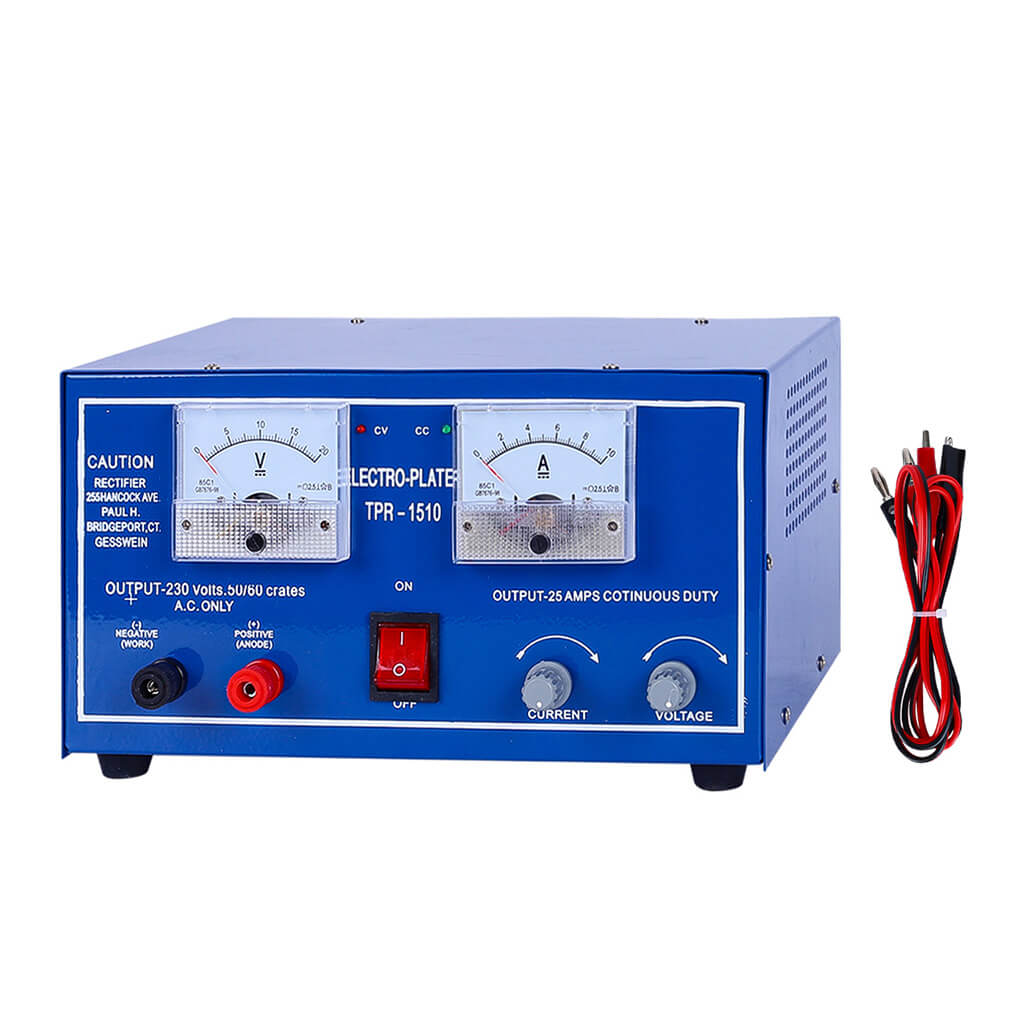
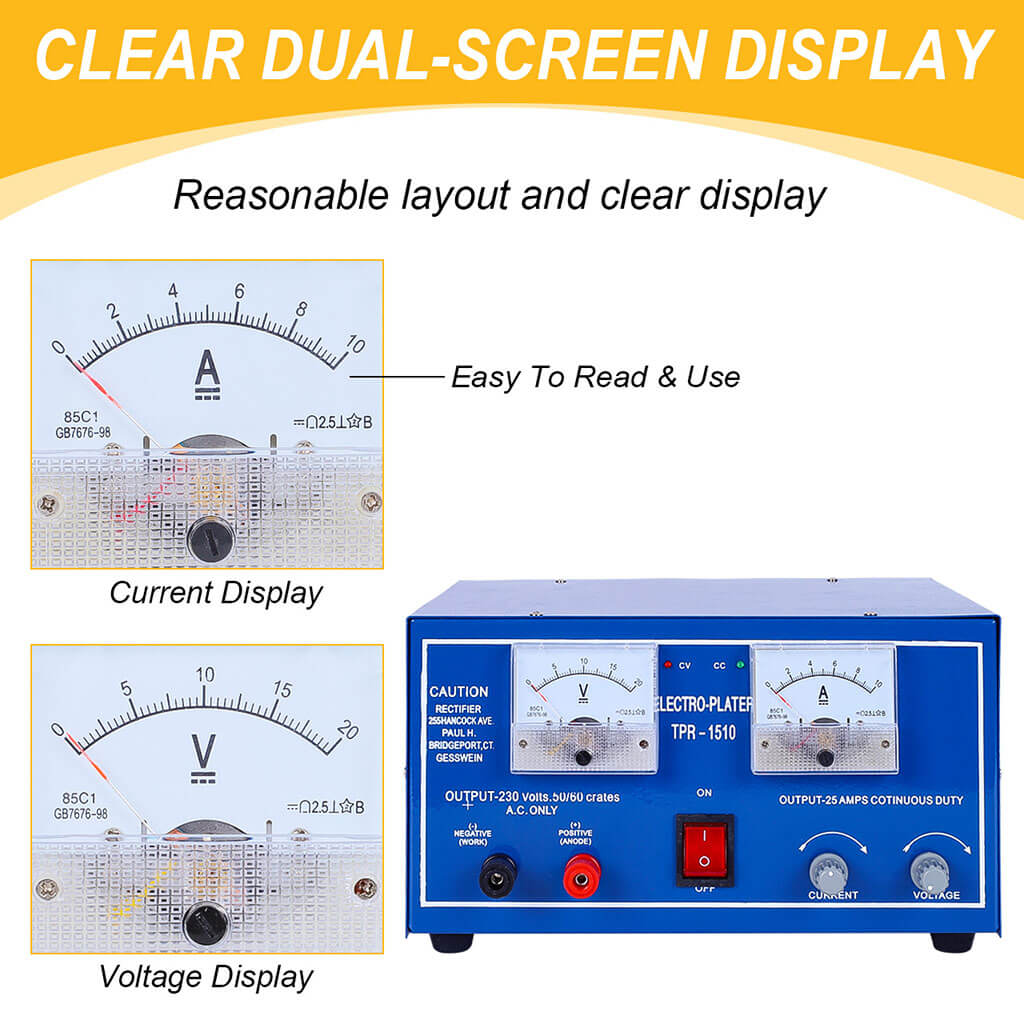
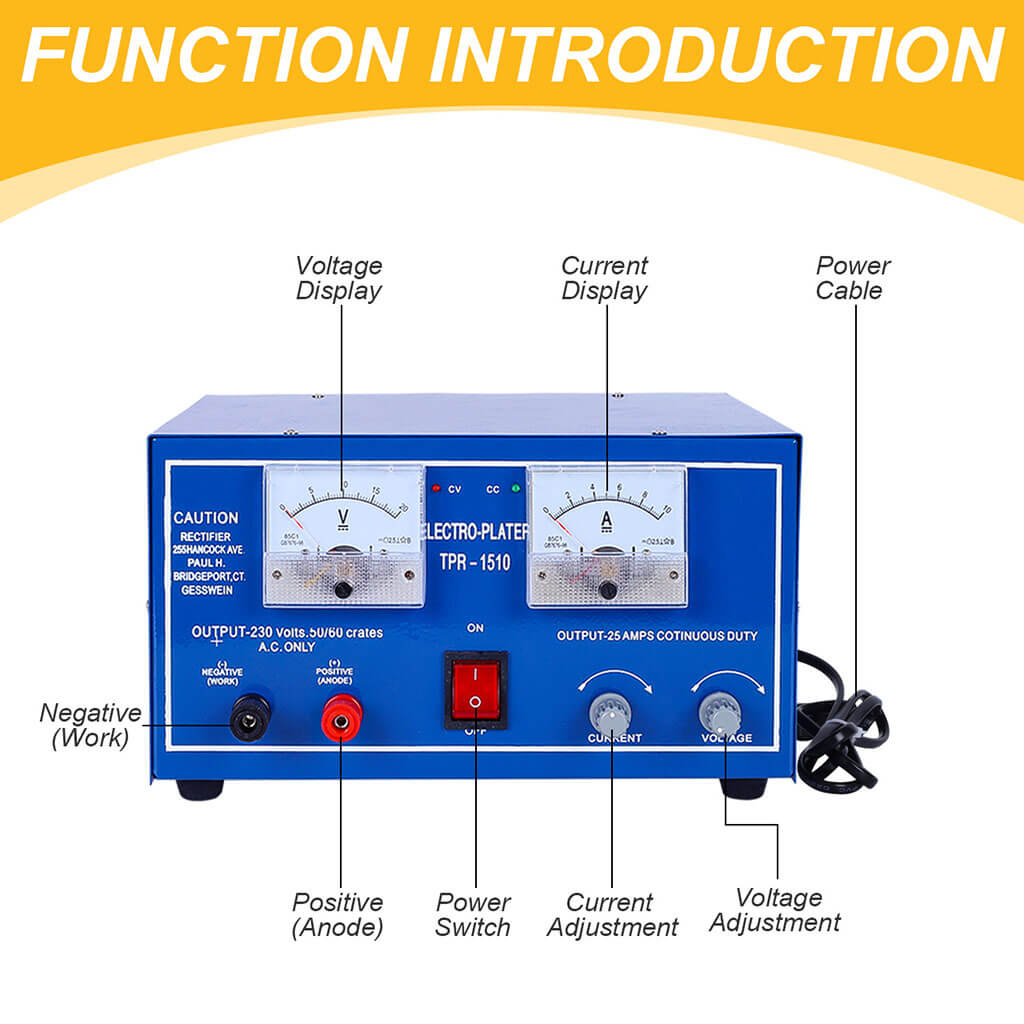
- Dual-dial digital display shows current and voltage simultaneously — read both values at a glance and adjust independently without switching between display modes
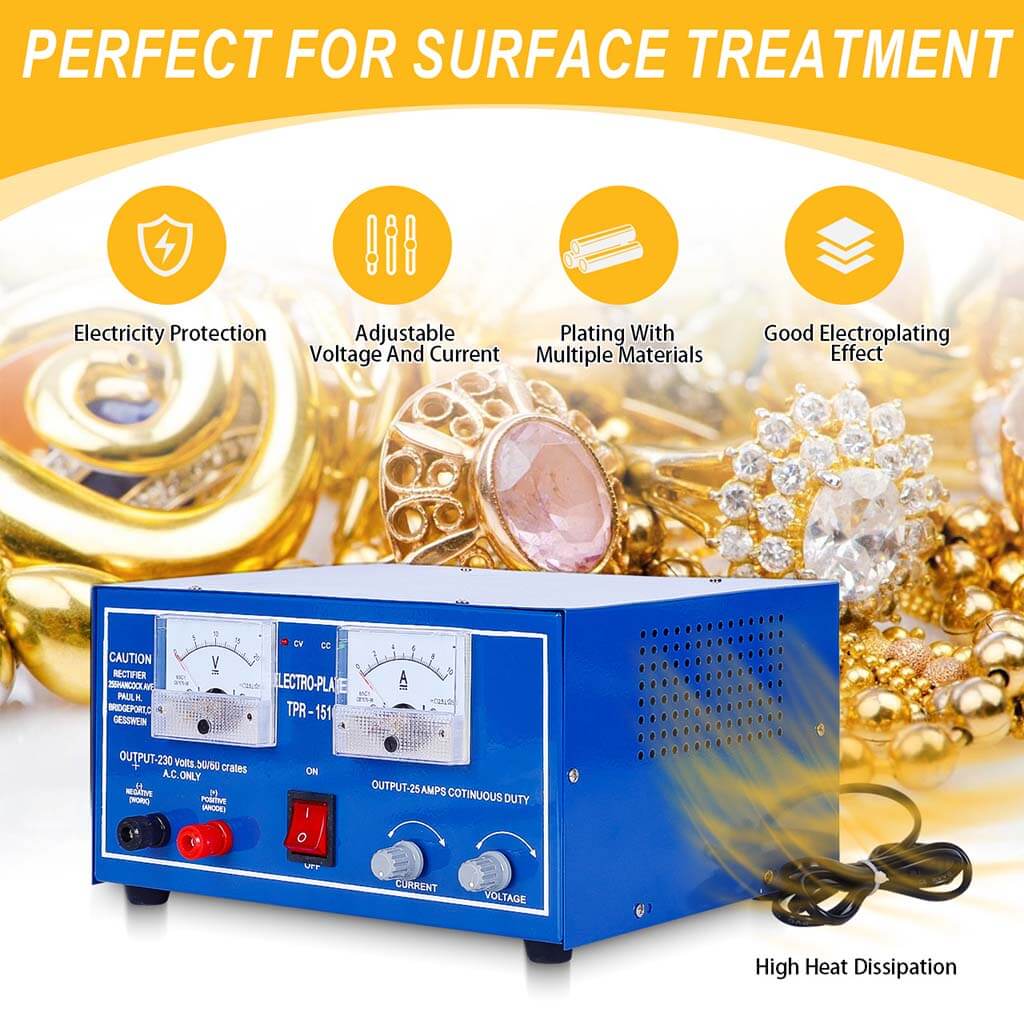
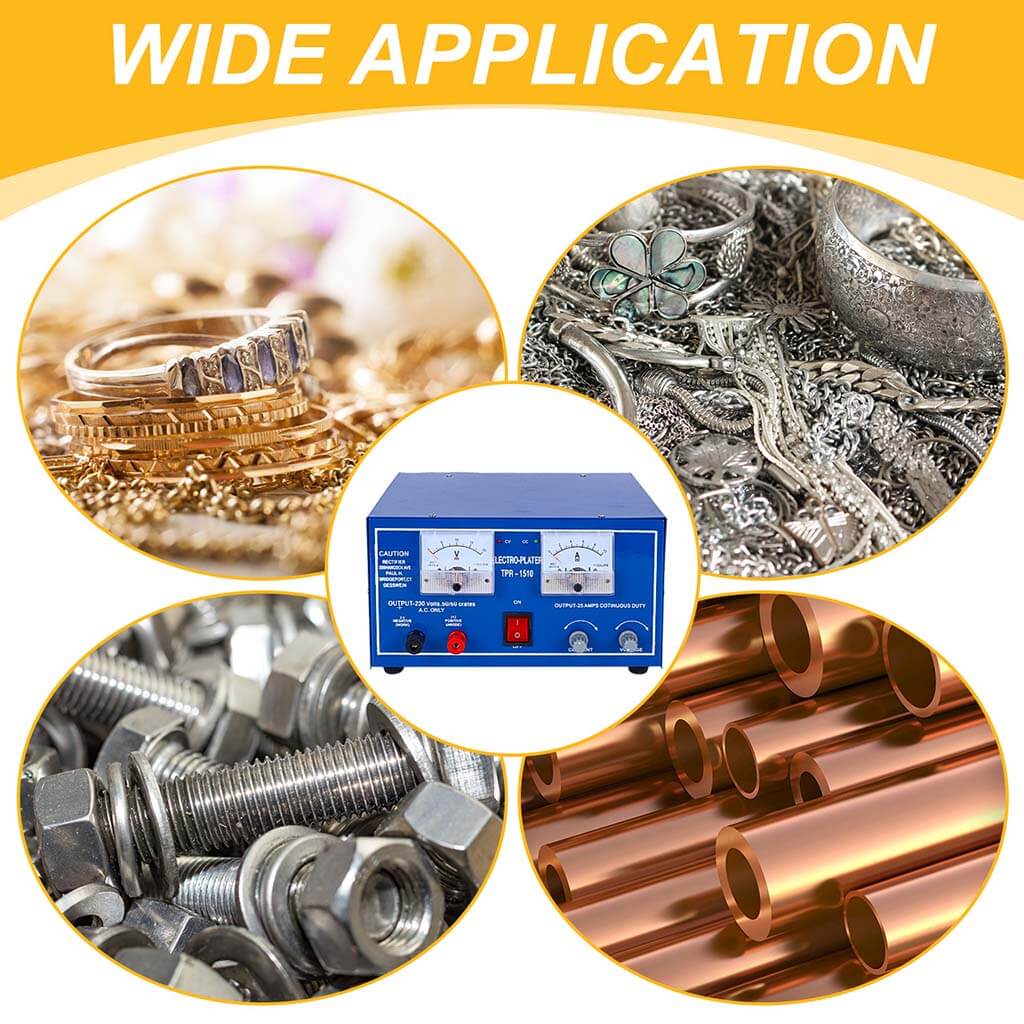
- 10A maximum current and 15V adjustable voltage covers the full range of jewelry electroplating requirements for gold, silver, copper, nickel, and chromium
- Automatic voltage regulation with over-voltage, over-current, and under-voltage protection — the machine protects itself and the workpiece if parameters drift outside safe limits
- Large-area top cooling design dissipates heat efficiently during extended plating sessions without requiring a separate cooling fan
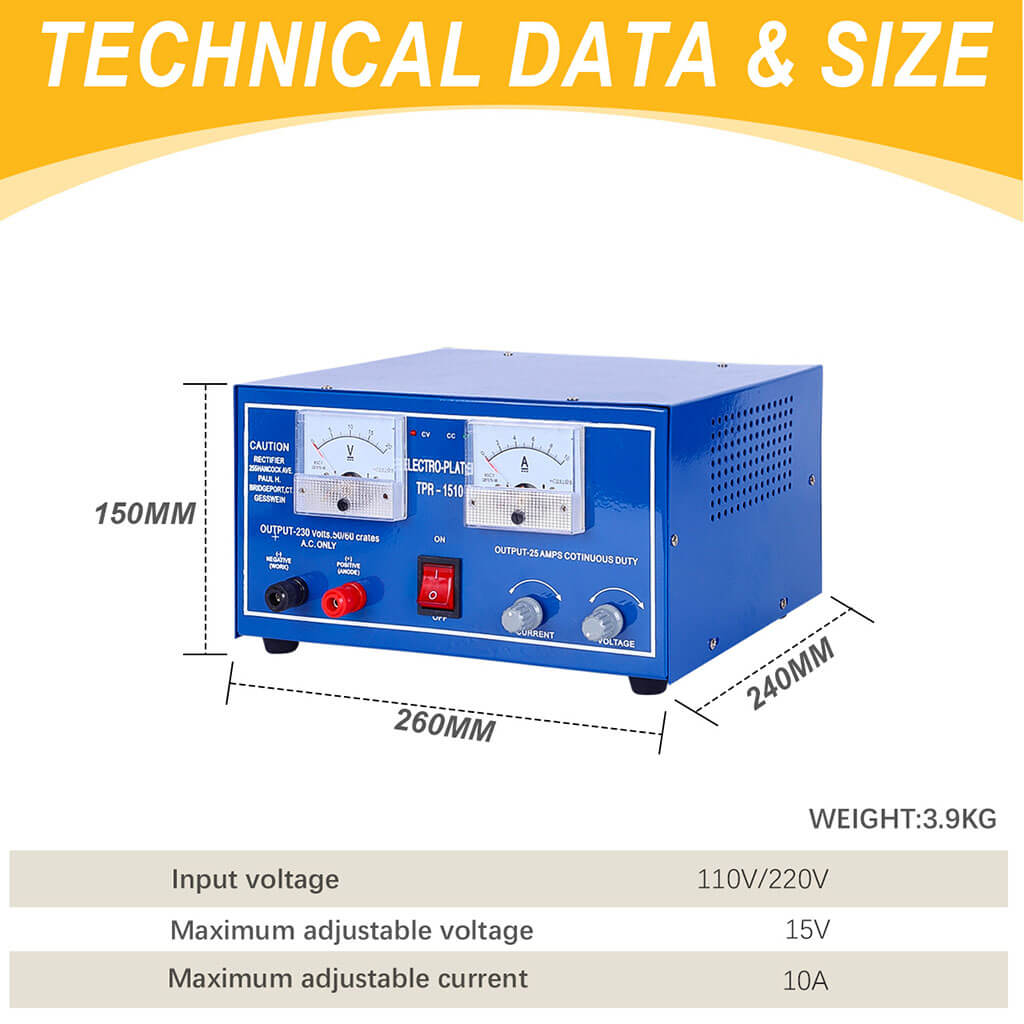
- Compact at 260 x 240 x 150mm (10.2 x 9.4 x 5.9 in) and 3.9kg (8.6 lb) — fits on a standard jewelry bench without requiring a dedicated equipment station
- Available in 110V and 220V to match your workshop power supply
About This Plating Rectifier
Electroplating quality is determined almost entirely by current density — the amount of current flowing through a given surface area of the workpiece. Too little current produces a thin, porous deposit that wears through quickly. Too much current causes burning, rough texture, and uneven buildup that requires stripping and replating. Getting this right requires a rectifier that lets you set and hold precise current and voltage values, and that shows you both readings simultaneously so you can monitor and adjust in real time.
The Tooltos TPR-1510 Plating Rectifier addresses this with a dual-dial digital display that shows current and voltage at the same time, independent adjustment dials for each parameter, and automatic regulation that maintains stable output even as bath temperature and solution concentration change during a plating session. The 10A maximum current and 15V adjustable voltage range covers the requirements for gold, silver, copper, nickel, chromium, and electrophoresis applications at the jewelry bench scale.
Plating Applications Reference
| Plating Type | Typical Current Range | Common Use |
|---|---|---|
| Gold plating | Low (0.1-0.5A typical) | Jewelry finishing, repair, and restoration |
| Silver plating | Low to medium (0.2-1A typical) | Silverware, jewelry, decorative items |
| Copper plating | Medium (1-5A typical) | Base layer for multi-layer plating, decorative copper finish |
| Nickel plating | Medium (1-5A typical) | Barrier layer, corrosion protection, bright finish |
| Chromium plating | High (5-10A typical) | Hard chrome, decorative chrome on metal parts |
Best For / Not For
| Best For | Not For |
|---|---|
| Jewelry studios and repair shops plating gold, silver, copper, nickel, and chromium at the bench scale | Plating solutions, anodes, and tanks not included — must be sourced separately before use |
| Jewelers who need precise, simultaneous current and voltage readout during plating sessions | Industrial-scale plating requiring currents above 10A — this rectifier is rated to 10A maximum |
| Metal finishing workshops doing multi-layer plating (copper base, nickel barrier, gold or chrome top coat) | Operation without adequate ventilation — plating solutions produce fumes that require proper airflow |
| Jewelry manufacturers doing production plating on batches of cast or fabricated pieces | Anodizing aluminum — this rectifier is designed for electroplating, not anodizing applications |
Technical Specifications
| Model | TPR-1510 |
| Max Current | 10A |
| Max Adjustable Voltage | 15V |
| Display | Dual-dial digital (current and voltage simultaneous) |
| Voltage Options | 110V / 220V (select at checkout) |
| Protection | Automatic voltage regulation, over-voltage, over-current, under-voltage |
| Cooling | Large-area top heat dissipation |
| Plating Types | Gold, silver, copper, nickel, chromium, electrophoresis |
| Machine Dimensions | 260 x 240 x 150mm (10.2 x 9.4 x 5.9 in) |
| Machine Weight | 3.9kg (8.6 lb) |
Pro Tips
- Start with a lower current setting than you think you need and increase gradually — it is easier to add more current to a thin deposit than to strip and replate a burned or rough surface caused by excessive current density.
- Clean and degrease the workpiece thoroughly before plating — any oil, oxide, or contamination on the surface will cause the deposit to peel or blister, regardless of how well the rectifier is set.
- Monitor both the current and voltage displays during the plating session — a rising voltage at constant current can indicate that the bath is becoming depleted or that the anode surface area is insufficient.
- Keep a log of current, voltage, time, and bath temperature for each plating run — consistent parameters are the most reliable way to reproduce the same deposit thickness and quality across multiple sessions.
- Allow the machine to cool between extended sessions — the large-area top cooling is effective for normal use, but sustained operation at maximum current for long periods generates significant heat.
Frequently Asked Questions
Are plating solutions and tanks included?
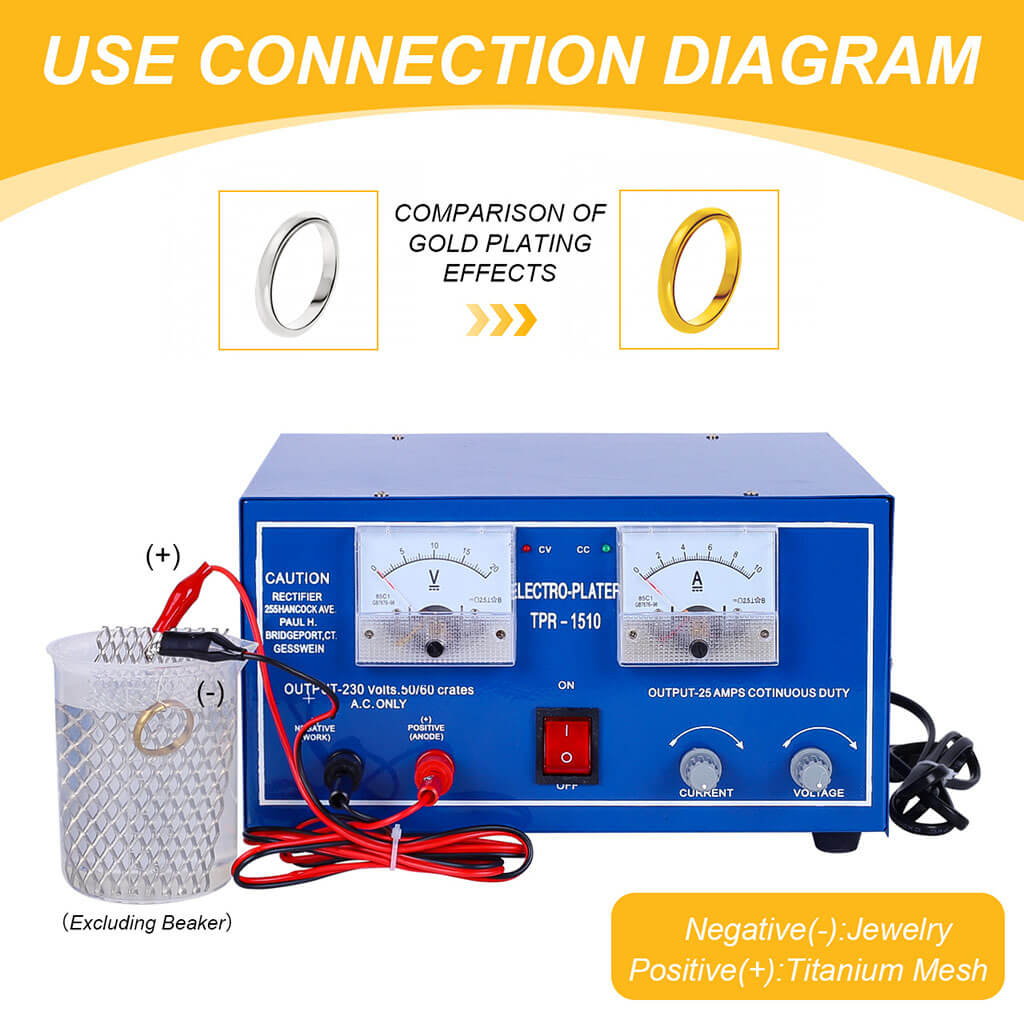
No. Plating solutions, anodes, and plating tanks are not included and must be sourced separately. The rectifier provides the controlled DC power supply — you supply the chemistry and equipment appropriate for your specific plating application.
What is the difference between the current and voltage dials?
The voltage dial sets the maximum output voltage of the rectifier. The current dial sets the maximum current. In practice, the actual current flowing through the plating bath is determined by the bath resistance (solution concentration, temperature, anode-cathode distance) — the current dial acts as a limit to prevent the current from exceeding your set value if bath resistance drops.
Can this rectifier be used for gold plating?
Yes. Gold plating typically requires low current (0.1-0.5A depending on bath type and piece surface area). The TPR-1510 adjusts down to very low current settings, making it suitable for gold plating on jewelry at the bench scale.
What safety precautions are required?
Always operate in a well-ventilated area — plating solutions produce fumes during operation. Wear chemical-resistant gloves and eye protection when handling plating solutions. Keep the rectifier away from moisture and do not operate near open flames or sparks. Follow the safety guidelines provided with your specific plating solution.
Which voltage should I order — 110V or 220V?
Select the voltage that matches your workshop power supply. North America and most of the Americas use 110V. Europe, Asia, Australia, and most other regions use 220V.
What if I have questions after receiving the rectifier?
Contact the Tooltos team at sales@tooltos.com. We respond within 24 hours on business days and can assist with current settings, plating parameters, and troubleshooting.
What's Included
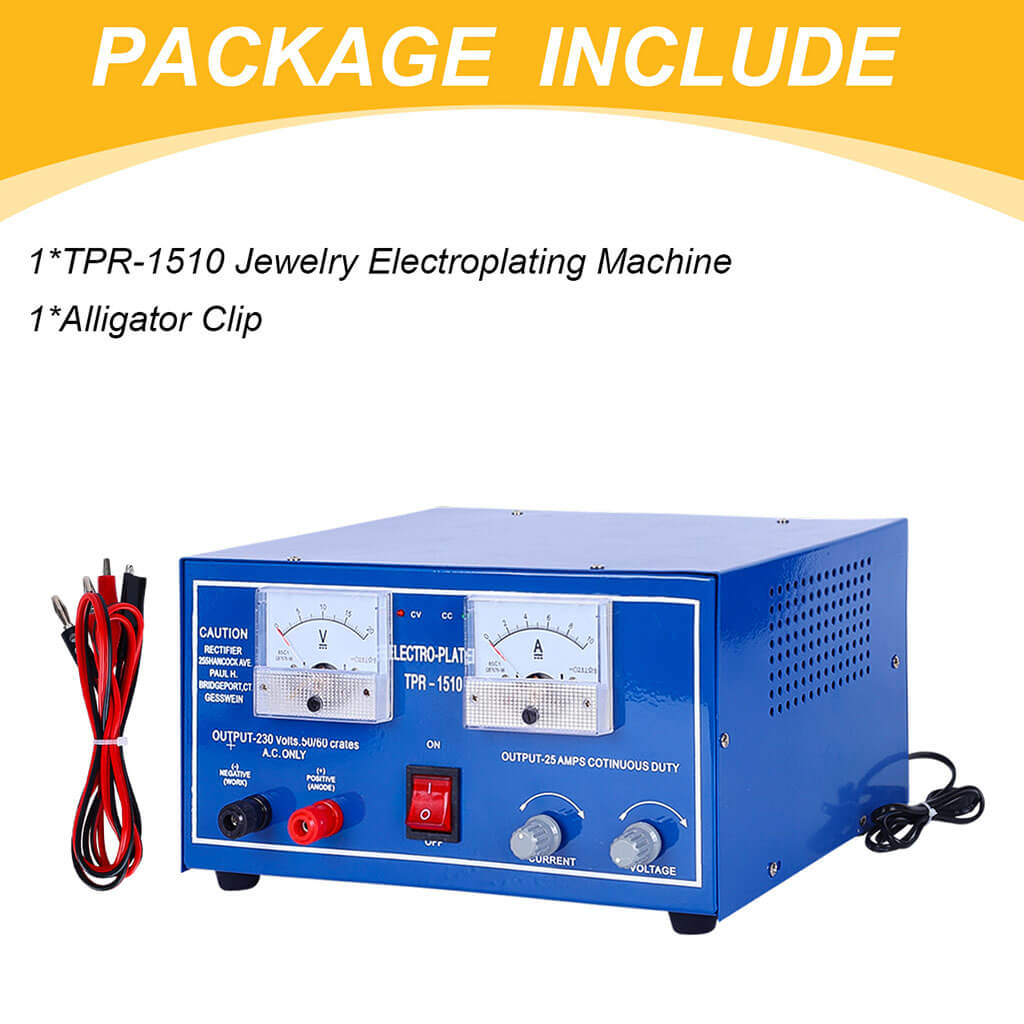
- 1 x TPR-1510 jewelry plating rectifier
- 1 x Alligator clip
- 1 x User manual
Support
Questions about current settings, plating solutions, voltage selection, or order status? Contact the Tooltos team at sales@tooltos.com. We respond within 24 hours on business days.