


If you're setting up a jewelry workshop or upgrading your casting setup, this is one of the most important decisions you'll make. Here's the direct answer: vacuum casting machines are better for most jewelers, especially for detailed work and silver/gold casting. Centrifugal machines have their place, but for precision and consistency, vacuum wins.
What is a Vacuum Casting Machine?
A vacuum casting machine uses negative pressure (vacuum) to pull molten metal into every corner of your mold. The vacuum eliminates air bubbles and gas pockets, resulting in cleaner, denser castings with sharper detail.
How it works:
- Place your invested flask in the casting chamber
- Melt your metal (silver, gold, brass, bronze)
- The machine creates a vacuum that draws molten metal into the mold
- Metal fills every detail of your wax model
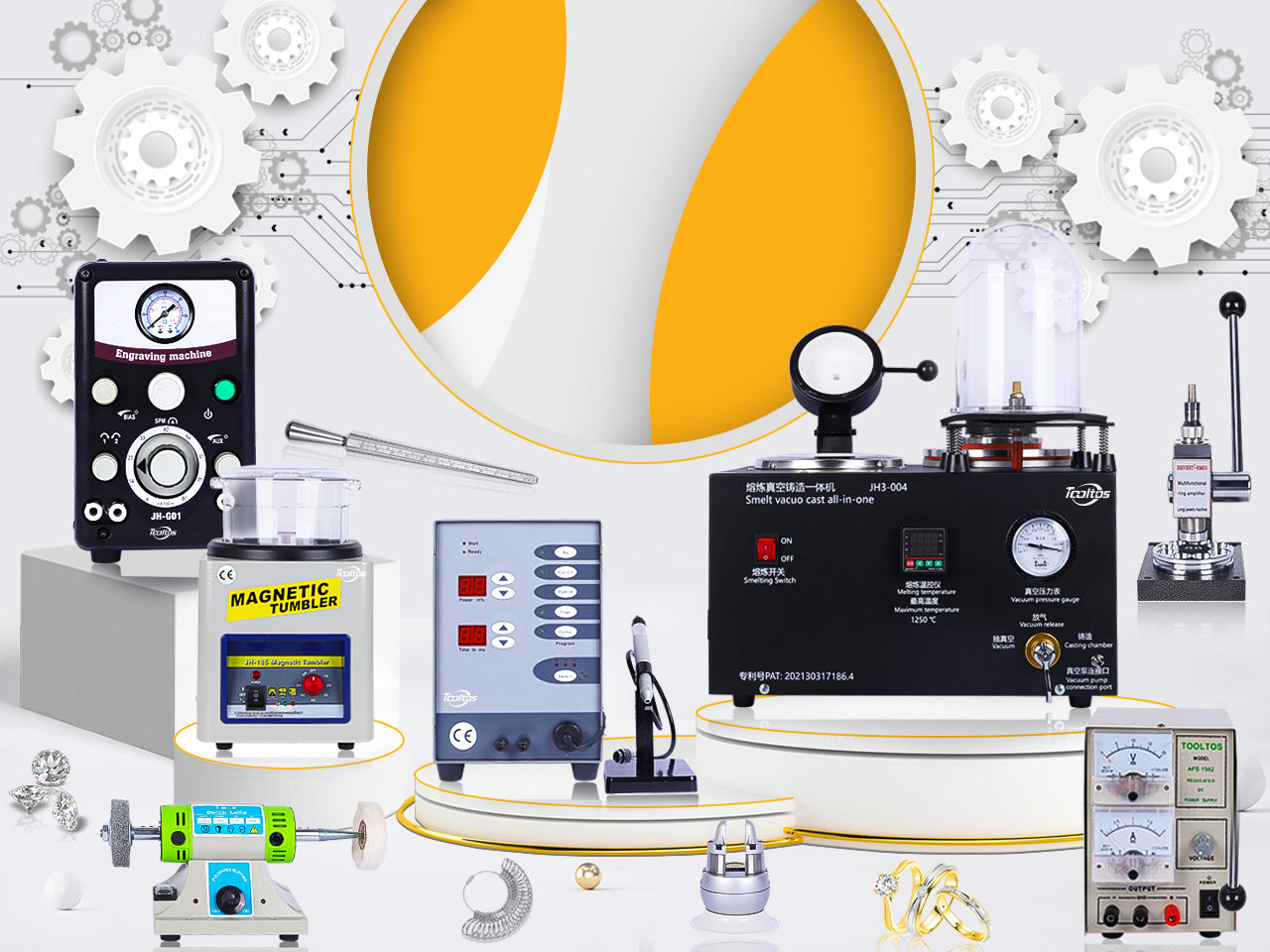
Tooltos vacuum casting machines available:
- Tooltos Digital Vacuum Casting Machine 1250°C — Digital temperature control up to 1250°C (±5°C accuracy), 2000W, suitable for melting gold, silver, copper, brass and bronze before vacuum casting. Crucible options: 1KG, 2KG, 3KG.
- Tooltos 2L Vacuum Investing Casting Machine — Built-in 2L vacuum pump, 375W, accommodates flasks up to 4" × 7". Compact design suited for home studios and small workshops.
- Tooltos 6L Vacuum Investing Casting Machine — Built-in 6L vacuum pump, 1200W, accommodates larger flasks up to 5" × 8". Designed for high-volume production casting.
What is a Centrifugal Casting Machine?
A centrifugal casting machine uses spinning force to push molten metal into the mold. The flask is placed in a rotating arm, and when metal is poured, centrifugal force drives it into the mold cavity.
Head-to-Head Comparison
| Feature | Vacuum Casting | Centrifugal Casting |
|---|---|---|
| Casting quality | ✅ Excellent — dense, clean | ⚠️ Good — can have porosity |
| Fine detail | ✅ Superior | ⚠️ Moderate |
| Ease of use | ✅ Beginner-friendly | ❌ Requires practice |
| Safety | ✅ Enclosed, safer | ❌ Open spinning — risk of spills |
| Metal types | ✅ Silver, gold, brass, bronze | ✅ Silver, gold, brass, bronze |
| Speed | ✅ Fast cycle time | ⚠️ Slower setup |
| Porosity issues | ✅ Minimal | ⚠️ More common |
| Workshop space | ✅ Compact | ❌ Needs clearance area |
| Maintenance | ✅ Low | ⚠️ Moderate |
| Price | ⚠️ Mid to high | ✅ Lower entry cost |
Who Should Choose a Vacuum Casting Machine?
Choose vacuum casting if you:
- Work with fine detail designs (filigree, prong settings, engraving)
- Cast silver, gold, or platinum
- Are a beginner or intermediate jeweler
- Want consistent, repeatable results
- Run a small to medium studio
- Prioritize safety in your workspace
Best for: Custom jewelry studios, production casting, lost wax casting, professional jewelers
Who Should Choose a Centrifugal Casting Machine?
Choose centrifugal if you:
- Have experience with casting and understand the risks
- Need a lower upfront investment
- Cast larger, simpler shapes where fine detail is less critical
- Already have a well-ventilated, spacious workshop
Best for: Experienced casters, larger simple forms, budget-conscious setups
Real Workshop Applications
Scenario 1 — Custom engagement ring studio:
A jeweler producing 10-20 custom rings per week needs consistent prong detail and clean stone seats. → Vacuum casting is well-suited for this type of precision work. The Tooltos Digital Vacuum Casting Machine offers digital temperature control up to 1250°C with ±5°C accuracy, designed for reliable silver and gold casting.
Scenario 2 — Art jewelry with organic forms:
A studio artist casting large bronze sculptural pieces where surface texture matters more than sharp edges. → Centrifugal can work, but vacuum still produces cleaner results.
Scenario 3 — Production casting shop:
A workshop casting 50+ pieces daily in silver. → Vacuum casting with the Tooltos 6L machine — 6L built-in pump, 1200W power, accommodates flasks up to 5" × 8" for high-volume production.
Frequently Asked Questions
Q: Can a vacuum casting machine also do investing (mixing plaster)?
Yes. Tooltos vacuum casting machines are dual-function — they handle both vacuum investing (mixing and degassing your plaster) and vacuum casting. This saves you from buying two separate machines.
Q: What metals can I cast with a vacuum machine?
Sterling silver, fine silver, yellow/white/rose gold, brass, bronze, and copper. Not recommended for platinum (requires specialized equipment).
Q: How long does a casting cycle take?
Typically 3-8 minutes per flask once your metal is melted. The vacuum process itself takes under 60 seconds.
Q: Do I need special flasks for vacuum casting?
Yes — perforated stainless steel flasks work best. Tooltos carries compatible casting flasks designed for vacuum machines.
Q: Is vacuum casting safe for a home studio?
Much safer than centrifugal — the enclosed chamber contains any spills. You still need proper ventilation and protective equipment (gloves, face shield).
Q: What's the learning curve?
Vacuum casting is beginner-friendly. Most jewelers are producing good castings within their first 2-3 attempts.
The Verdict
For the vast majority of jewelers — from beginners to professionals — vacuum casting machines deliver better results, safer operation, and more consistent quality.
Centrifugal casting has a role in specific situations, but if you're investing in your workshop for the long term, vacuum casting is the smarter choice.
Ready to upgrade your casting setup?
Browse Tooltos vacuum casting machines at www.tooltos.com — professional jewelry equipment with direct factory pricing and expert support at sales@tooltos.com.
0 comments