

The quick answer
If the same prong comes out short every time, compare the problem mold with a known-good mold before increasing pressure. If you find a broken wax fragment in the cavity, investigate demolding first. If the missing area moves between shots, start by checking the nozzle seal and how consistently you inject.
| What you see | Check first | Next test |
|---|---|---|
| The same prong is short every time | Check the matching cavity for retained wax and inspect the feed path and existing vent. | Try a known-good mold with the same wax and settings. |
| The missing area changes between shots | Check whether the mold inlet sits squarely against the nozzle. | Repeat with the same settings and hold the mold in the same position. Note any wax leaking at the nozzle. |
| A wax fragment is left in the mold | Check how the mold opens around the detail and whether the wax had set before release. | Keep injection settings fixed and change only the release technique or cooling time in the next test. |
| Several familiar molds suddenly fill short | Check whether the wax has stabilized after warm-up or a refill. Confirm its recommended injection temperature range. | Repeat a known-good mold after the temperature stabilizes. |
| A thin fin appears along the mold seam after you raise pressure | Stop increasing pressure. Check how the mold halves align and close. | Return to the previous pressure setting and check the next pattern for seam flash. |
Tell a short fill from a broken prong
After the wax sets, open the mold carefully and inspect both the pattern and the matching cavity under magnification. A rounded or tapered end can suggest the wax stopped short. A rough fracture or a matching fragment in the cavity points toward breakage during release. Use the shape as a clue and check whether it repeats on the next shot. For a complete pattern with a minor surface flaw, see our guide to repairing wax models before casting.


Record your settings before changing them
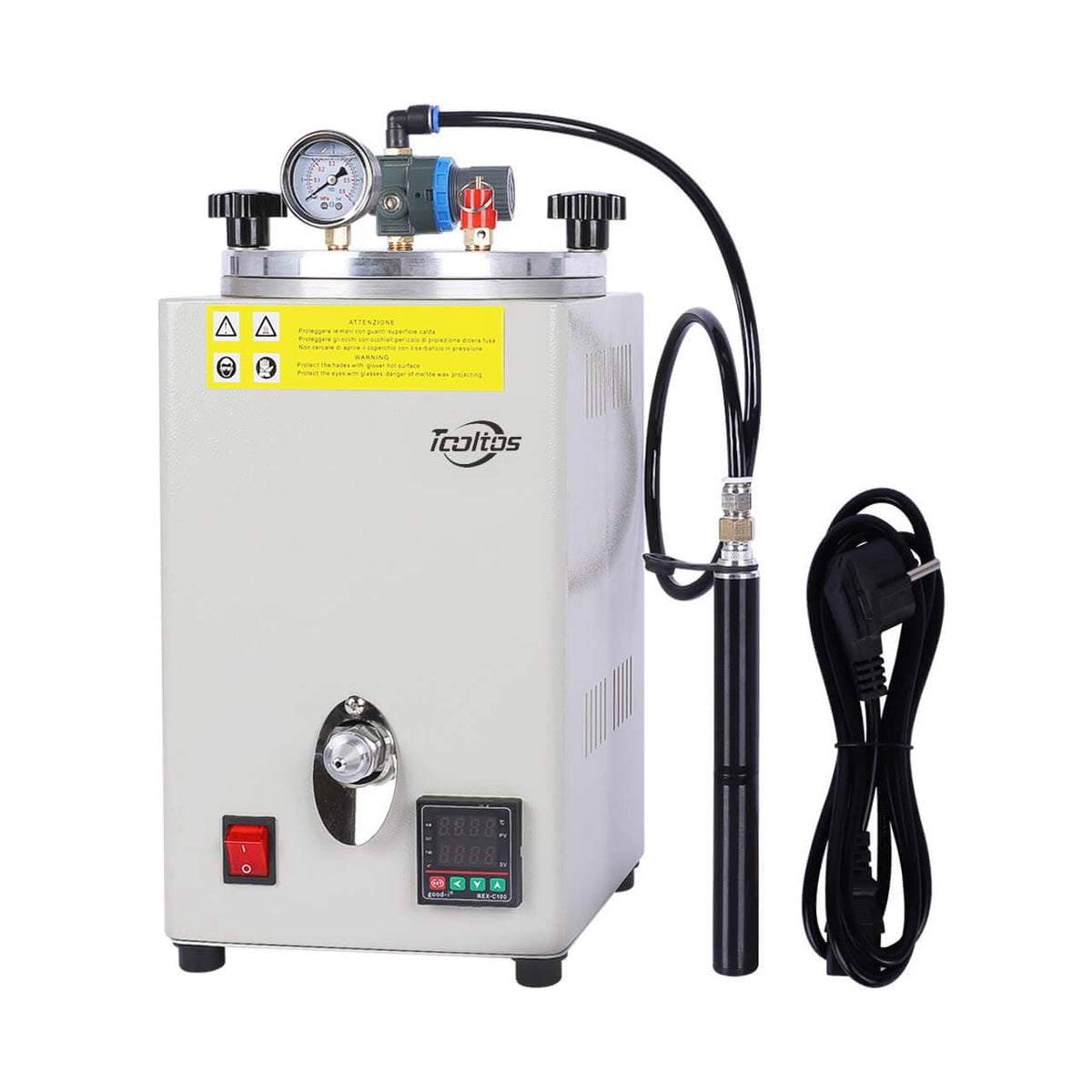
On the Tooltos manual-pump injector shown below, read the pressure gauge just before each shot and note the temperature on the digital display. Use the same pressure unit throughout the test. Record the following for each pattern:
- Mold ID and wax grade
- Displayed wax temperature and pressure just before injection
- Injection time and cooling time before opening the mold
- Missing area, any wax in the cavity, and any nozzle leak or seam flash
Example: Three test rounds for a missing ring prong
This example shows how to isolate a variable. Keep the wax, displayed temperature, pressure, injection time and cooling time consistent across the comparison.
- Repeat the original mold. Record whether the same prong is short again. Check the cavity for a fragment before calling it a fill problem.
- Switch only the mold. Try a similar mold that normally fills well. If it fills and the original repeatedly fails, examine the original mold first. If both fill short, look for a shared cause such as poor nozzle contact or a temperature that has yet to stabilize.
- Retest after one correction. For example, if you find retained wax in an existing vent, clear it using the mold maker’s guidance and retry the original mold with the baseline settings. Compare the same prong for fill and the seam for flash. Repeat the successful shot before recording the setting for that mold.
Follow the injector’s operating instructions around hot wax. Let the unit cool and release pressure according to its manual before opening the tank or servicing the nozzle.
Frequently asked questions
What pressure should I use for jewelry wax injection?
Start with the guidance for your injector, wax and mold. Pressure requirements vary with the wax, the mold and the geometry of the pattern. Record a setting after it consistently produces a complete pattern without flash.
Do I need an air compressor to run this test?
The Tooltos digital wax injector with manual air pump builds pressure with its built-in manual pump. For other machines, check the air supply requirements in the product specifications. You can compare them in the jewelry wax injection machine collection.
0 comments