

When bezel-set jewelry comes back from a sulfur hot spring looking dull, the visible problem may be more than ordinary surface dirt. Water and residue can reach the edges of the setting, the underside of the stone, and the metal inside the bezel. Before choosing a cleaning method, a jeweler needs to identify the materials and decide whether the piece is structurally and thermally suitable for cleaning.
The short answer
Inspect first. Use directed steam only for accessible residue on compatible, structurally sound jewelry. Tarnish, a loose stone, or an uncertain gemstone calls for a different decision, not more steam.
That first check matters especially for jewelry containing opal, pearl, turquoise, emerald, amber, coral, fracture-filled stones, or stones with an unknown treatment history. Do not direct high-temperature steam at a stone simply because the metal looks tarnished. If the stone, its treatment, or the condition of the setting is uncertain, have a qualified jeweler evaluate the piece before cleaning.
Separate Inspection from Cleaning
Begin with a visual inspection before choosing a cleaning tool:
- Setting security: look for movement in the stone and cracks in the bezel edge.
- Metal and finish: check for trapped deposits, discoloration, and damaged plating.
- Stone condition: look for changes in the stone and confirm its identity and treatment history.
A cleaning tool can remove suitable surface contamination. It cannot correct a loosened setting, restore a material altered by heat or chemicals, or confirm that residue beneath a fixed stone has been fully removed.
Residue removal is not tarnish treatment.
Do not assume steam will reverse sulfur-related discoloration. If the metal remains dark after surface contamination is removed, assess the metal, finish, and gemstone compatibility before choosing a separate tarnish-removal treatment.
For a piece with a secure setting and known, steam-compatible materials, cleaning is a finishing step after that inspection. Secure the piece with suitable holding equipment, keep hands clear of the jet, direct the spray away from yourself and other work, and use short, controlled passes. Avoid treating a cleaning machine as a substitute for re-setting or repair.
Where Directed Steam Is Useful
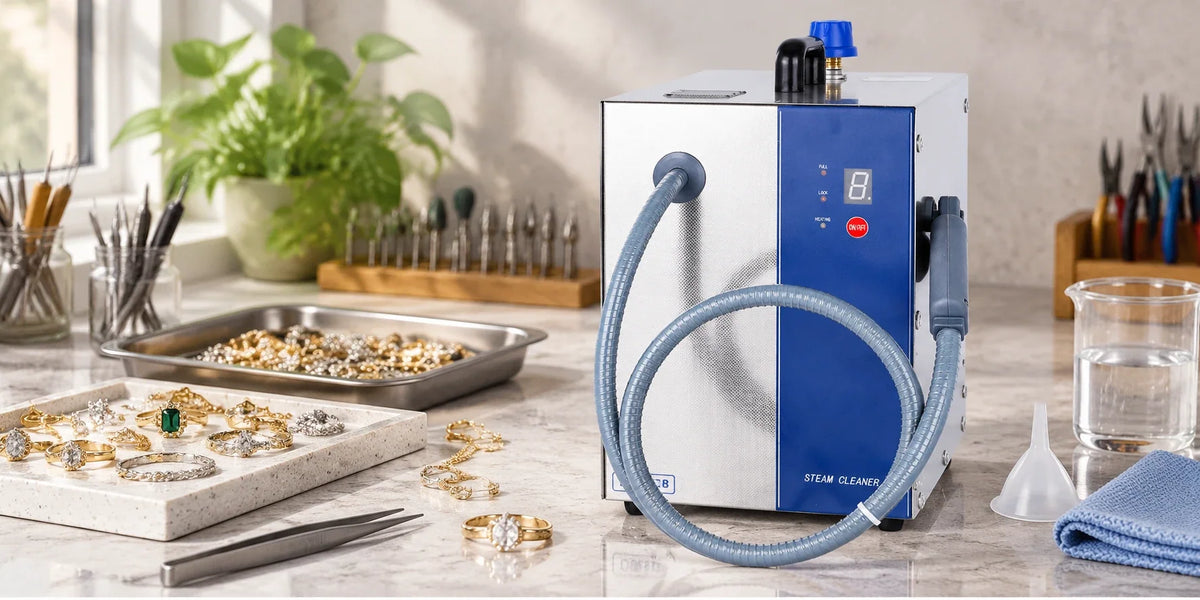
The Tooltos 3L Jewelry Steam Cleaner with Handheld Gun is designed for professional cleaning of compatible gold, silver, and platinum jewelry. Its handheld hose lets the operator aim steam at ring shanks, chain links, prong settings, and other recesses rather than relying on a fixed nozzle.

Machine at a glance
- Handheld hose: 1200 mm (47.2 in)
- Stated operating pressure: 4 bar (58 PSI)
- Maximum steam temperature: 135°C (275°F)
For jewelry confirmed as appropriate for steam, the directed gun can help remove oils, polishing compound, and loose surface residue from accessible areas that are difficult to reach. A handheld nozzle does not guarantee access beneath a closed bezel or a fixed stone.
Stop if the gemstone is uncertain
Do not use this high-temperature steam cleaner on heat-sensitive or porous gemstones such as opals, pearls, turquoise, coral, amber, emeralds, or treated and fracture-filled stones. If a stone or its treatment cannot be identified with certainty, do not steam it.
Use the Machine as Part of a Controlled Bench Process
- Measure before filling. Use purified or distilled water and do not exceed the product's stated 2 L maximum fill per session, despite its 3 L tank capacity.
- Prepare the machine and the piece. Follow the operating instructions and let the unit reach operating pressure before cleaning. Secure compatible jewelry and keep hands clear of the jet.
- Clean with control. Use short passes and direct steam at a slight angle so debris can move away from the piece.
- Shut down safely. Switch off the unit and follow its instructions for cooling and depressurizing before opening or emptying the tank. Never open or refill a hot, pressurized tank.
Keep the cleaning decision separate from the repair decision. If residue or discoloration appears to sit beneath a fixed stone, evaluate whether the setting must be opened by a qualified jeweler rather than increasing steam exposure.
Choose the Next Step by the Condition of the Piece
| What you find | Next step |
|---|---|
| Accessible residue on compatible, structurally sound jewelry | Consider directed steam after inspection. |
| A damaged bezel or a loose stone | Choose bench repair before cleaning. |
| A sensitive, treated, porous, or unidentified gemstone | Do not steam. Refer the piece for evaluation. |
| Persistent discoloration or suspected residue beneath a fixed stone | Seek a material-specific assessment, not a longer steam cycle. |
For shop cleaning equipment suited to different workloads, explore the Tooltos jewelry steam cleaner collection. Choose the process around the jewelry's materials and condition, not around the availability of a machine.
Contact Tooltos
Have questions about choosing a jewelry steam cleaner, machine setup, or product support? Contact the Tooltos team at sales@tooltos.com.
0 comments