

The quick answer
When sterling silver cracks in a rolling mill, start with when the damage first appeared. A seam visible before rolling calls for an inspection of the ingot. An edge split on the first pass calls for a check of the blank and the roller gap. Cracks after several passes, especially when the crank has become harder to turn, call for a review of your reductions and annealing history. Stop as soon as you see a crack. Another pass can extend it.

Match the symptom to the next check
| What you see | What to check next |
|---|---|
| A seam, pit or irregular edge on the unrolled ingot | Inspect both faces and edges in angled light. Set aside a blank with a visible seam or deep defect. |
| A split after the first pass | Review the blank’s starting thickness and edge shape, its prior working and annealing history, and how much thickness that pass removed. |
| Edge splits after several passes | Check the total reduction since the last anneal. Increasing resistance can be a clue, especially if the gap has also been tightened substantially. |
| Flaking or multiple cracks across the face | Stop and separate that batch. Review the condition of the original ingot and the source of the scrap before trying again. |
Before the first pass, check the ingot and the mill
Dry the blank and inspect both faces and both long edges. Measure at several points with a caliper. A blank that tapers across its width can meet the rollers unevenly, even if the gap looks right from the front. A dark line that was already present is worth inspecting before you try to flatten it. Surface appearance alone can’t establish what is inside a self-cast ingot.
For sheet, identify the flat section of the rolls and confirm the blank fits within its usable width. With the mill stopped, check the flat faces for debris or damage and confirm the setup against its manual. If otherwise sound pieces consistently emerge thicker on one side, check whether the rollers are parallel using the manufacturer’s procedure. Keep fingers, loose clothing and hair clear of the rolls.

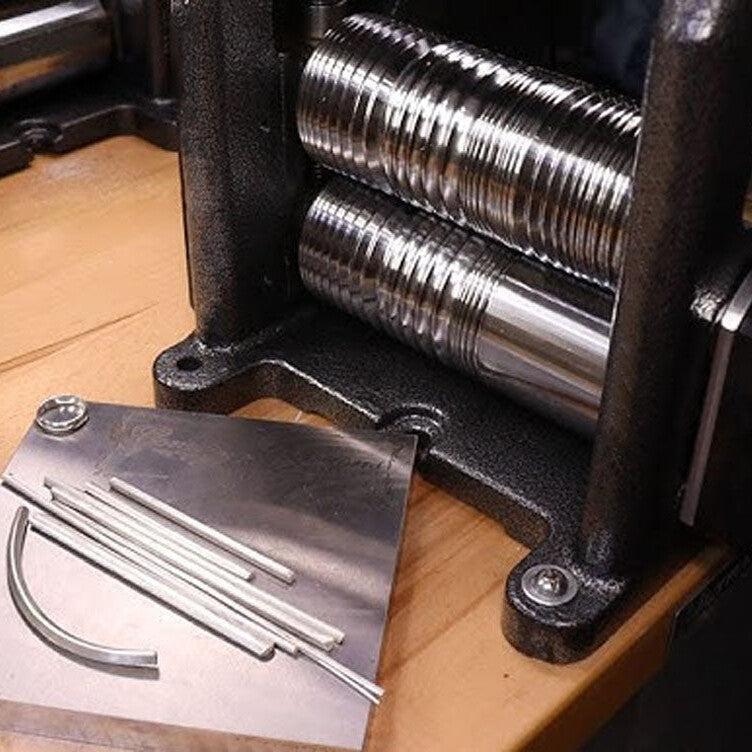
The Tooltos 120 mm manual rolling mill illustrates how flat and grooved sections share the same rolls. If you are checking whether your sheet will fit, measure against the flat section as explained in our rolling mill width guide.
Change one variable before you try again
- Record the starting thickness. Measure the same locations before and after the first pass. That gives you a record of what the gap actually removed.
- Use a lighter pass on sound stock. Set the gap for a small reduction and follow the mill’s instructions. If resistance jumps or the blank will not feed normally, stop and reassess the gap and material condition.
- Track reduction since the last anneal. Sterling silver work-hardens as you roll it. Follow the alloy supplier’s annealing instructions, including cooling and preparation before it goes back into the mill. Annealing can restore workability to sound material. An existing crack still needs to be assessed separately.
- Use known stock as a comparison. If self-cast pieces keep failing, a sound piece of known sterling of comparable thickness can help you check the setup. Try it under comparable conditions with a light pass. If the known stock rolls evenly, inspect the ingot and scrap history. If both show a similar problem, check the mill setup and rolling sequence again.
When to set the silver aside
Stop if a split grows, more cracks appear, or the face begins to flake. If an isolated crack lies entirely in material you can trim away, inspect the fresh edge before deciding whether the remaining piece is suitable to roll. Set aside a blank with multiple cracks, a recurring seam or uncertain alloy history. Keep clean, identified sterling scrap separate from mixed or solder-bearing scrap so you can trace what went into each batch.
Frequently asked questions
Can annealing fix a crack in sterling silver?
Annealing can soften work-hardened silver. The crack remains. Stop rolling and assess how far it extends before deciding whether the affected section can be removed.
Why does my self-cast silver crack when commercial sheet rolls fine?
Compare starting thickness and prior working history first. If those are reasonably comparable, review the cast blank’s uniformity, any visible seams and the source of the metal. The comparison narrows the investigation without identifying the cause on its own.
How much should I reduce sterling silver per pass?
Start with a light pass on sound stock, measure the actual change and follow your mill and alloy guidance. The starting thickness, metal condition and amount of prior working all affect how the next pass behaves.
If you are new to the tool, start with the jewelry rolling mill guide or compare the flat and grooved sections on our manual jewelry rolling mills.
0 commentaire