

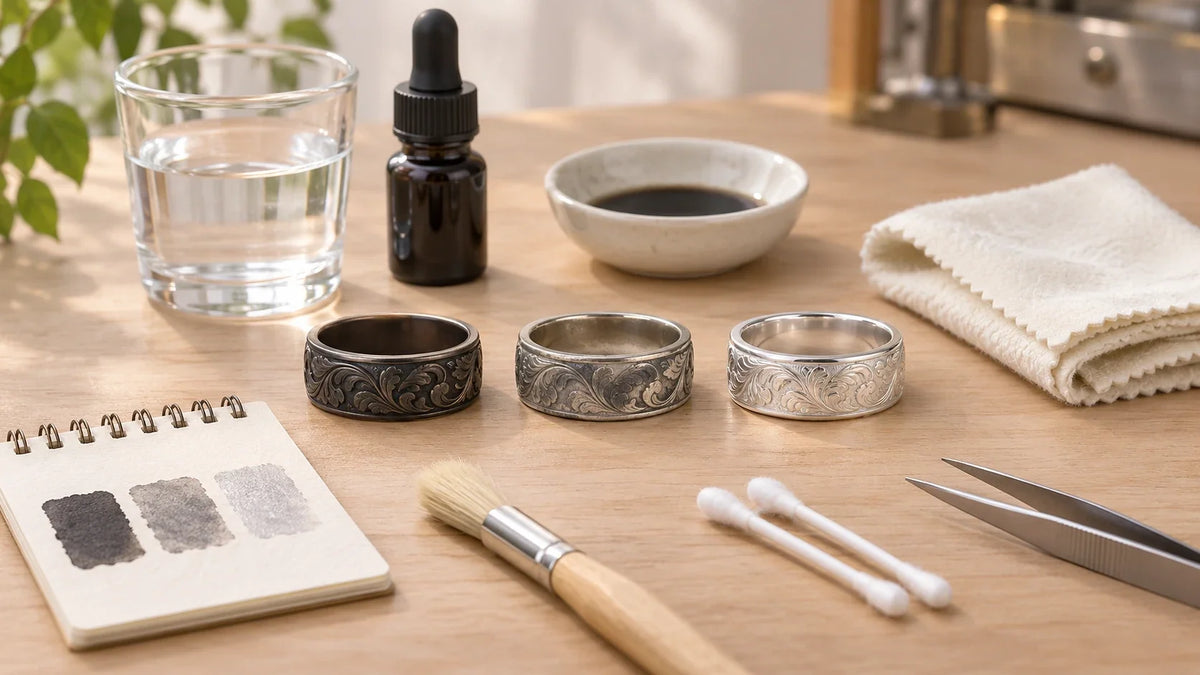
A dark jewelry patina can look deep and even during application, then dry gray, brown, streaky, or unexpectedly light. Before adding more patina, check the metal surface, remaining residue, the product instructions, and how the piece was handled after application.
Patina is a surface treatment, not a substitute for clean metal or a guarantee against wear. Treat the process as a controlled sequence, and test it on an offcut made from the same alloy before applying it to a finished piece.
Start with the surface you actually have
Fingerprints, polishing compound, adhesive residue, dust, and old oxidation can interrupt an even reaction. Clean with a method suitable for the metal and any existing components, rinse thoroughly, and avoid touching the prepared surface with bare fingers.
Pickling can remove certain heat oxides and residues after soldering, but it does not replace every cleaning step. Follow the manufacturer's instructions, then rinse completely. A remaining film, contaminated rinse water, or cleaning-product residue can contribute to patchy color.
Do not mix up cleaning and polishing
Cleaning removes oils and loose residue. Polishing changes the surface texture and reflectivity. A bright polish can create stronger contrast with dark recesses, while a matte or textured surface can give the finish a different appearance. Choose the intended contrast before starting.
If you intend to brighten raised areas after patinating, use a controlled method and inspect often. Aggressive finishing can remove the dark layer from edges, texture, and fine detail. Confirm suitability before treating stone-set, plated, glued, or mixed-material work.
Apply the patina under repeatable conditions
Patina results vary with the metal alloy, product concentration, temperature, and contact time. Some products are used at room temperature; others specify a warm workpiece or a particular application method. Follow the product's own instructions rather than transferring settings from another solution.
Apply the finish evenly, because uneven contact time can create stripes. If the color is too light, do not immediately increase the concentration or add more heat. First check the alloy, surface preparation, solution condition, and recommended process. Follow the product's ventilation and protective-equipment guidance, and do not mix chemicals unless the manufacturer explicitly directs it.
Let the finish dry before judging the color
Wet patina can look darker than the final dry result. Rinse or neutralize only as directed, then dry fully before deciding whether another application is needed. Sealing a wet surface can trap moisture or residue and make refinishing harder.
Test the intended finish on a sample first. Check it after drying, gentle handling, and the planned final cleaning. A color that looks correct only while wet is not a reliable target for the finished piece.

Protect the finish according to the piece
Dark patina can wear on high-contact areas, especially ring shanks, bracelet edges, clasps, and raised details. A clear protective finish may change the color, sheen, feel, and future repair options, so test compatibility and appearance on a sample first.
For pieces intended to stay dark, give customers care guidance suited to the metal, stones, patina, and any protective coating. Avoid harsh cleaners, repeated abrasive polishing, and unnecessary moisture. Reassess a worn finish instead of applying more product over an uncleaned surface.
Build a repeatable finishing sequence
An even dark finish depends on consistent preparation: clean the metal, rinse as directed, avoid recontamination, apply the patina according to its instructions, allow it to dry, and then adjust contrast carefully. Record the alloy, product, concentration, temperature, and timing that work for your studio.
For tools suited to your material and intended surface, explore Tooltos jewelry polishing and finishing equipment. Choose the tool around the desired finish, not simply the darkest possible color.
Contact Tooltos
For questions about Tooltos jewelry tools and finishing equipment, email us at sales@tooltos.com.
0 comments