

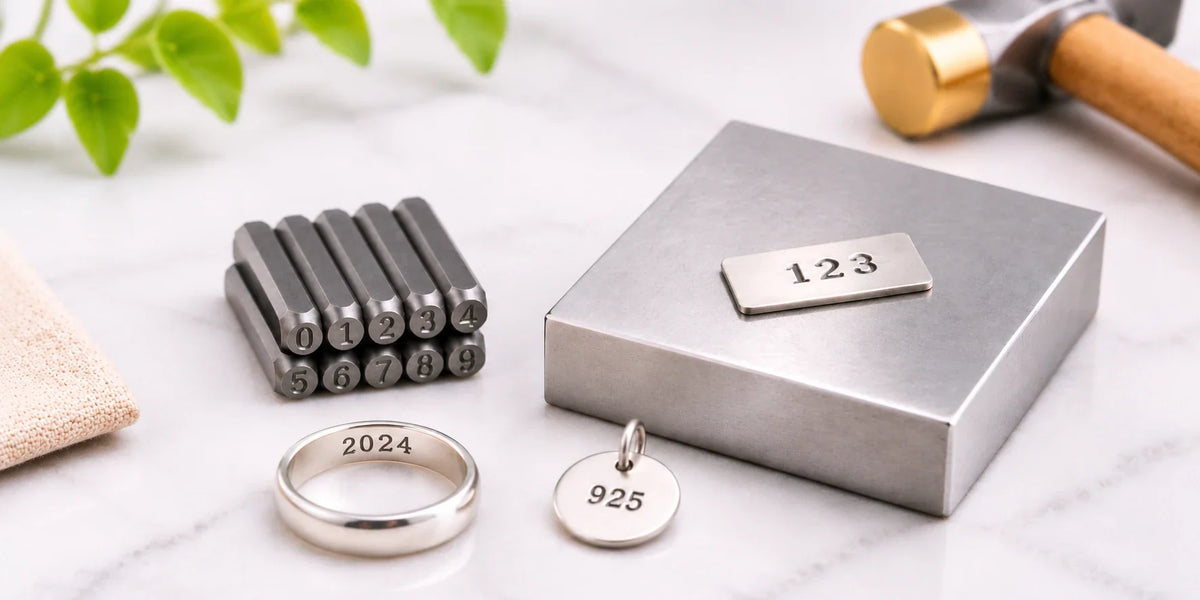
A small mark can identify the maker, carry an initial or date, or add a decorative detail. Before choosing a jewelry stamp, separate three ideas: a maker mark, a personal message, and a regulated fineness mark. They do not serve the same purpose.
Know what the mark is meant to say
A maker mark identifies the person, studio, or brand behind a piece. It may be initials, a symbol, or a custom logo. A personal message can be a date, name, word, or short phrase. A fineness mark indicates a stated precious-metal content, but marking requirements vary by country.
Do not treat a hand-stamped number as proof of gold, silver, or platinum content. Before applying a fineness claim, check the requirements of the relevant market with its official hallmarking authority or a qualified professional, including any testing, documentation, and marking requirements.
Design for the available space
Start with the smallest realistic marking area, not a full-size screen logo. The inside of a narrow ring, the back of a pendant bail, and the edge of a clasp offer different amounts of usable metal. A stamped mark needs an accessible area and suitable support, with enough metal thickness to take an impression without distortion.
Reduce the design to its most recognizable form. Fine lines, tiny enclosed spaces, and long words may become unclear at a small scale or disappear after finishing. Test the design at actual size on the same alloy and thickness. Confirm the stamp's orientation before striking.
Choose a marking method that matches the purpose
Individual letter and number punches work for practice pieces, dates, initials, and variable text. Each character must be aligned and struck separately. A custom die can give a repeatable logo when the same mark appears across a collection, but it needs a finalized design suited to the metal, scale, and production method.
Engraving can suit small runs, irregular locations, or changing marks. Curved, thin, textured, plated, or stone-set areas still need assessment before permanent marking. Choose the method around the piece rather than forcing a stamp into an unsuitable location.
Test the mark before the finished piece
Use a practice blank that matches the final material and thickness. Place it on firm, level support, stabilize the stamp, and make a controlled strike. A shifted stamp can create a doubled outline that is difficult to correct.

Inspect the impression before and after your intended cleaning and polishing process. It should remain readable without requiring excessive material removal or weakening a small component. If results are inconsistent, adjust the layout, support, stamp size, or workholding before marking the finished piece.
For test layouts with dates or initials, the Number/Letter Alphabet Metal Stamping Set offers selectable letter or number punches in multiple sizes. Pair it with a Steel Metal Bench Block to provide a firm supporting surface for flat practice blanks. These tools support personalization and practice; they do not create a custom logo or establish a legally recognized hallmark.
Place the mark where it can be found later
A useful position is discreet but accessible: the inner shank of a ring, the reverse of a pendant, a tag near the clasp, or a flat back plate. Assess the thickness and support at the chosen spot. Keep the mark away from solder seams, prongs, highly stressed bends, and areas that will be heavily textured or polished.
Consider repairs too. A mark in a likely resizing zone or beside a future solder joint can be damaged. Leave a clear, protected marking area wherever the design allows.
Keep records with the finished work
For a custom mark, retain the final artwork, supplier details, and a clear image of the impression. For metal-content statements, keep the material information and the documentation required for the relevant market.
A useful jewelry maker mark is small, readable, and honest about what it represents. Design around the available metal, test before marking the final piece, and keep personal decoration separate from regulated metal claims.
Explore Tooltos metal stamps and punches for tools to support jewelry practice and personalization.
Contact Tooltos
Have questions about our jewelry stamping tools or need help choosing an option? Contact the Tooltos team at sales@tooltos.com.
0 commentaire