

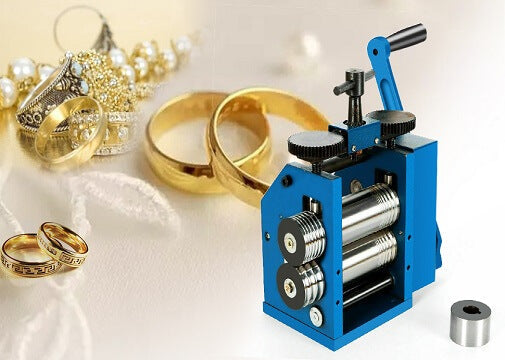
The rolling mill is one of the most versatile tools in jewelry making. At its core, it consists of a pair of precisely ground, hardened steel rollers fixed in parallel inside the machine. Its primary function is to reduce the thickness of sheet metal and wire by rolling them through under controlled pressure. Beyond that, it can emboss textures, produce foil, shape wire profiles, and laminate bimetal combinations.
Manual vs Electric Rolling Mills
Rolling mills come in two main drive types: manual and electric.
| Feature | Manual Rolling Mill | Electric Rolling Mill |
|---|---|---|
| Drive | Hand crank | Electric motor |
| Size | Compact | Larger footprint |
| Output | Lower throughput | Higher throughput |
| Cost | Lower | Higher |
| Best for | Small studios, occasional use | Production studios, frequent use |
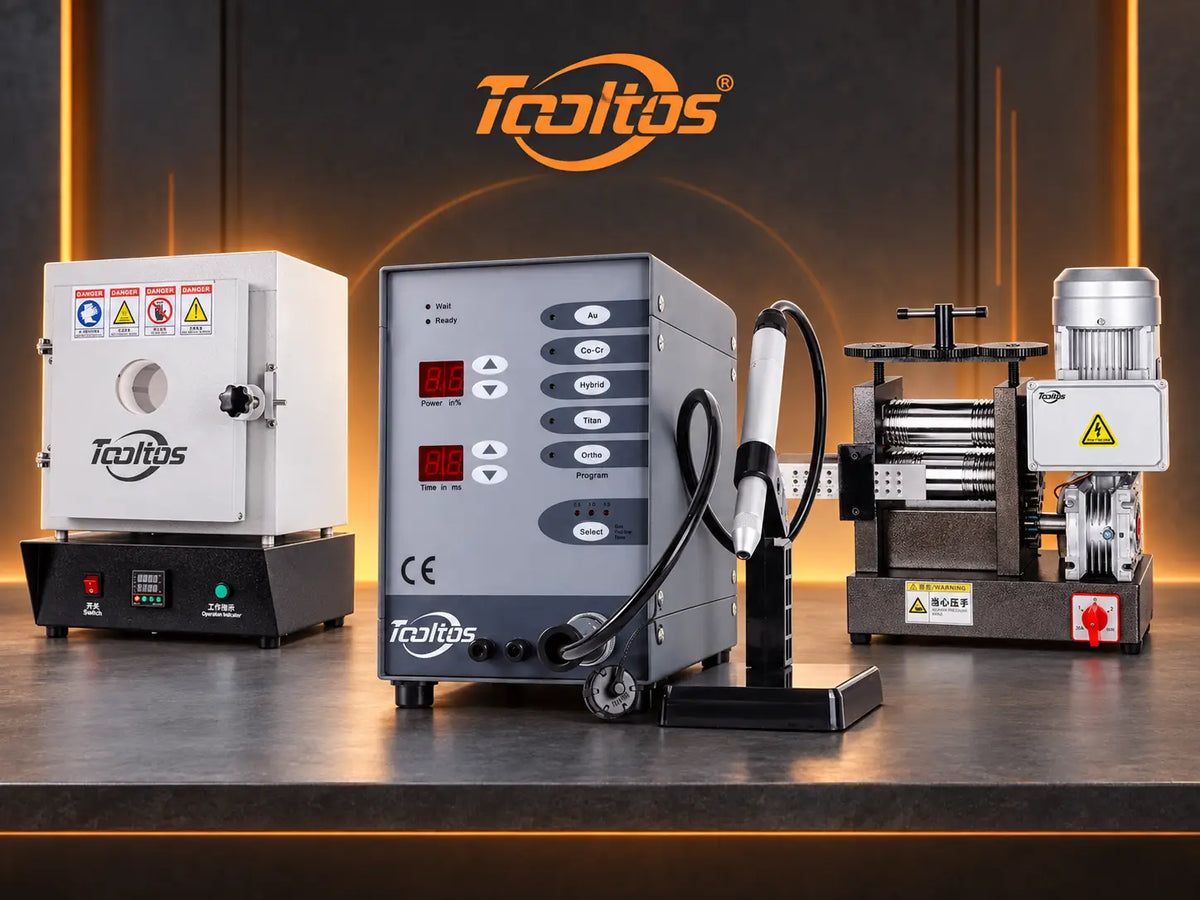
There is little difference between the two in terms of basic functionality. For most studio jewelers, a manual rolling mill can complete the majority of everyday tasks. Electric models become worthwhile when volume or fatigue is a factor.
The Four Main Roller Types
Flat rollers are the most common type and are used to reduce the thickness of sheet metal. They can also be used to press textures into sheet using pattern plates or organic materials.
Wire rollers (also called groove rollers) have a series of grooved channels along their face. They reduce wire diameter and can produce square or round cross-sections depending on the groove profile.
Round rollers are similar to wire rollers and are primarily used for wire processing — reducing cross-section quickly and efficiently.
Combination rollers incorporate both flat and grooved sections on the same roller, allowing sheet and wire processing in one machine. The trade-off is that the working width for each mode is narrower than a dedicated single-purpose roller.
Side Auxiliary Rollers
Many rolling mill models include side mounting points for auxiliary rollers. These can be added to expand functionality without sacrificing the main roller width. Common auxiliary roller profiles include semicircular, flat, and wire-groove types. This design allows a single machine to handle more tasks while keeping the primary rollers dedicated to sheet or wire work.
Maximum Opening Width: A Critical Buying Factor
The maximum gap between the two rollers determines the widest or thickest piece of material the machine can accept. Before purchasing, measure the widest sheet or heaviest gauge wire you intend to process and confirm the mill can accommodate it. A machine with a transmission (geared drive) mechanism will also handle resistance more smoothly and sustain continuous operation with less physical effort.
How to Use a Rolling Mill
Manual rolling mill: Secure the machine firmly to the bench before starting to prevent movement under load. Open the roller gap wider than your material, insert the metal, then close the gap until the rollers just contact the surface. Turn the crank steadily to pass the metal through. Reduce the gap in small increments and repeat until the material reaches the desired thickness. Avoid closing the gap too tightly in a single pass — this makes cranking difficult and can damage the rollers.
Electric rolling mill: The process is identical. Instead of turning a crank, connect the power, set the gap, and switch on the motor to drive the rollers. Feed the material steadily and reduce the gap incrementally between passes.
Texturing: Anneal and clean the metal, then stack your pattern template on top of the metal sheet. Set the roller gap to grip both together firmly but not excessively. Feed both through the rollers in one steady pass, flip end-to-end, and repeat until the pattern impression is clear and even.
What Makes a Quality Rolling Mill
A quality rolling mill is built from first-grade hardened steel rollers with a precision-ground surface finish. This minimizes surface marks on the metal and maintains consistent performance over years of use. A well-maintained rolling mill is a long-term studio investment — with proper care, quality machines last for decades. When evaluating models, look for solid steel construction, tight roller parallelism, smooth gear operation, and a clear gap-adjustment mechanism. Tooltos rolling mills are built to these standards, designed for both studio jewelers and production workshops.
Related Guides
Shop Jewelry Rolling Mills
Browse manual and electric rolling mills at Tooltos. Contact us at sales@tooltos.com — we respond within 24 hours on business days.
0 comentarios