

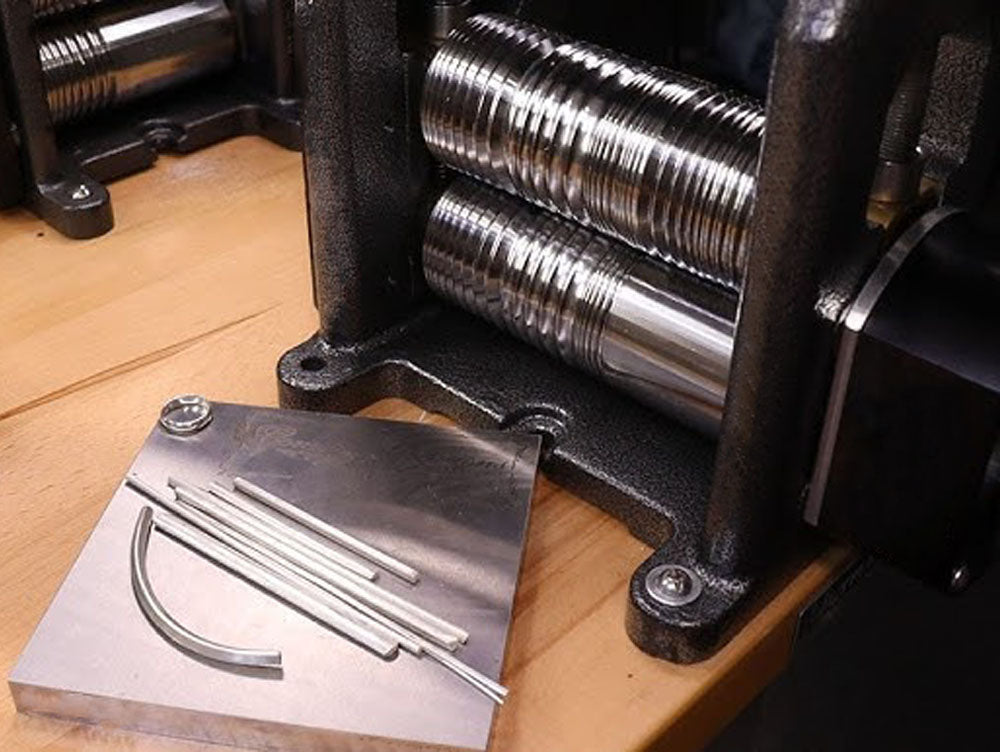
A rolling mill is an essential tool in jewelry making used for shaping, reducing, and texturing metals. It consists of two hardened steel rollers positioned parallel to each other that rotate in opposite directions. The metal sheet or wire passes through these rollers, transforming its thickness, shape, or surface texture based on the jeweler's needs.
Types of Rolling Mills
- Manual Rolling Mills — Operated by hand using a crank. Ideal for small-scale projects and occasional use.
- Powered Rolling Mills — Equipped with a motor for consistent and efficient rolling. Suitable for larger-scale or frequent use.
- Combination Rolling Mills — Feature both flat and grooved rollers, allowing for sheet and wire rolling in one machine.
- Texture Rolling Mills — Designed to add patterns or textures to the metal surface using etched rollers or texture plates.
Common Uses of a Rolling Mill in Jewelry
- Thickness Reduction — Flattens metal sheets or reduces the gauge of wire to the desired thickness. Produces uniform and precise results efficiently.
- Texturing Metal — Adds patterns to metal using texture plates or organic materials like leaves, fabrics, or lace. Ideal for creating unique decorative surfaces.
- Wire Shaping — Shapes and reduces the size of wire by passing it through grooved rollers.
- Metal Hardening — Compresses the metal, increasing its density and surface hardness.
- Flattening and Straightening — Smoothens metal after it has been soldered, worked, or cast.
- Bimetal Lamination — Joins layers of different metals to create bimetal sheets for unique designs.
How to Use a Rolling Mill
- Prepare the metal — Clean and anneal the metal to make it soft and workable.
- Adjust the rollers — Set the gap between the rollers based on the desired thickness or task.
- Feed the metal — Pass the metal through the rollers, turning the crank or engaging the motor.
- Monitor the process — Adjust the rollers gradually to avoid over-compressing or damaging the metal.
- Texture application — Place texture materials on the metal and roll them through together for patterning.
Tips for Using a Rolling Mill
- Anneal often — Regular annealing prevents cracking or brittleness during rolling.
- Use lubrication — Apply a light lubricant to rollers and metal to reduce friction and protect the roller surface.
- Clean the rollers — Keep rollers free of debris to avoid unwanted marks on the metal.
- Test on scrap metal — Practice on scrap pieces to perfect your technique before working on finished stock.
Benefits of a Rolling Mill
- Increases efficiency and precision in metalworking
- Reduces the need for pre-purchased sheet or wire, saving material costs
- Provides creative opportunities through texturing and shaping
- Works with a wide range of metals including silver, gold, copper, brass, and bronze
A rolling mill is a valuable investment for jewelers who frequently work with metal, offering versatility and professional results across a wide range of studio tasks.
Related Guides
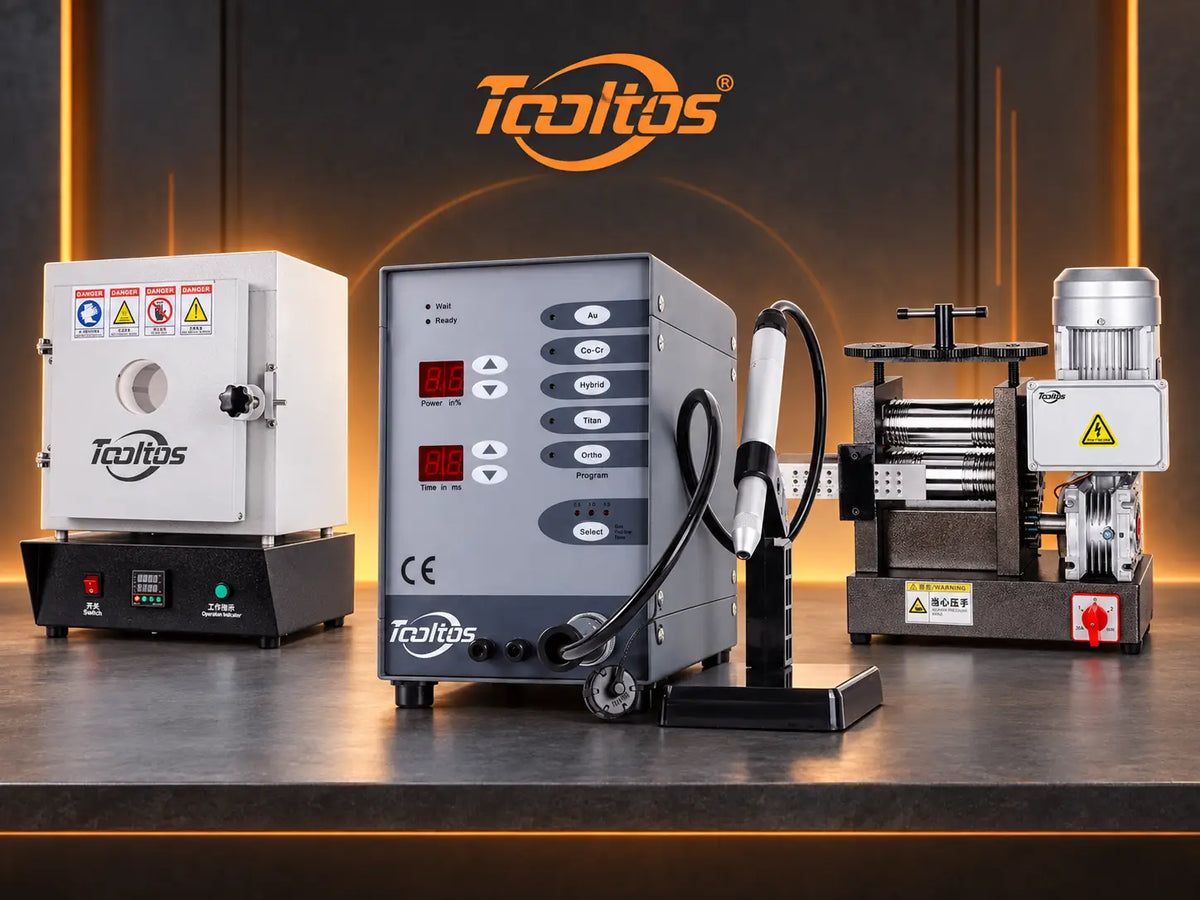
Shop Jewelry Rolling Mills
Browse professional jewelry rolling mills at Tooltos. Contact us at sales@tooltos.com — we respond within 24 hours on business days.
0 comentarios