


Finishing is where a piece starts to look intentional. A clean, even surface can make a cast component feel refined; the wrong finishing method can soften details, leave residue in hard-to-reach areas, or consume bench time that should have been spent on design and assembly.
For jewelers who process more than an occasional single piece, a tumbler can make finishing more consistent. But “jewelry tumbler” is not one universal solution. Magnetic, rotary, and vibratory tumblers move media in different ways, so they excel at different jobs.
The practical question is not which one is best overall. It is: what surface result do you need, what are you finishing, and how much work moves through your bench at once?
The Quick Answer
- Choose a magnetic tumbler for small, intricate metal pieces, chain, pierced details, and areas where fine stainless-steel pins can reach.
- Choose a rotary tumbler for approachable small-batch burnishing and a steady, flexible finishing workflow.
- Choose a vibratory tumbler when you need gentle, repeatable batch finishing and want to preserve the overall form of delicate pieces.
All three are mass-finishing tools. They can brighten, smooth, burnish, deburr, or prepare metal for the next step depending on the media and process. They do not remove the need to inspect a piece before and after finishing, especially when stones, thin sections, sharp edges, solder seams, or fragile settings are involved.
What Changes from One Tumbler to Another?
The key difference is the motion that carries the media around the jewelry.
| Tumbler Type | How It Moves | Strong Fit | Watch For |
|---|---|---|---|
| Magnetic | A magnetic drive moves fine stainless-steel pins in liquid around the workpiece. | Intricate metal forms, chains, small holes, and detailed castings. | A brightening tool, not a substitute for heavy cleanup or careful setting protection. |
| Rotary | A barrel rotates so the load and media roll together. | Small batches, simple repeatable burnishing, and studios building a basic finishing routine. | The rolling action can soften vulnerable edges if the process is not controlled. |
| Vibratory | A bowl vibrates, moving jewelry and media in a circulating action. | Batch finishing, deburring, and delicate work that benefits from less rolling action. | Results depend heavily on media, compound, load, and regular inspection. |
The media is part of the system—not an accessory chosen at random. Stainless-steel shot or pins, ceramic media, plastic media, wood media, and finishing compounds all produce different levels of cutting, smoothing, burnishing, or drying. Always follow the machine and media supplier’s loading guidance, and test a representative sample before committing a finished production batch.
When a Magnetic Tumbler Makes the Most Sense
Magnetic tumblers use a rotating magnetic field to drive small stainless-steel pins through water and around a metal workpiece. Because the pins are fine, they can reach places that larger media may not: small holes, the links of a chain, textured recesses, and detailed cast surfaces.
That makes a magnetic tumbler a smart first choice when the bottleneck is access, not simply volume. It is particularly useful for jewelers who routinely work with detailed pendants, small findings, chain, filigree-like forms, or cast pieces with tight internal areas.
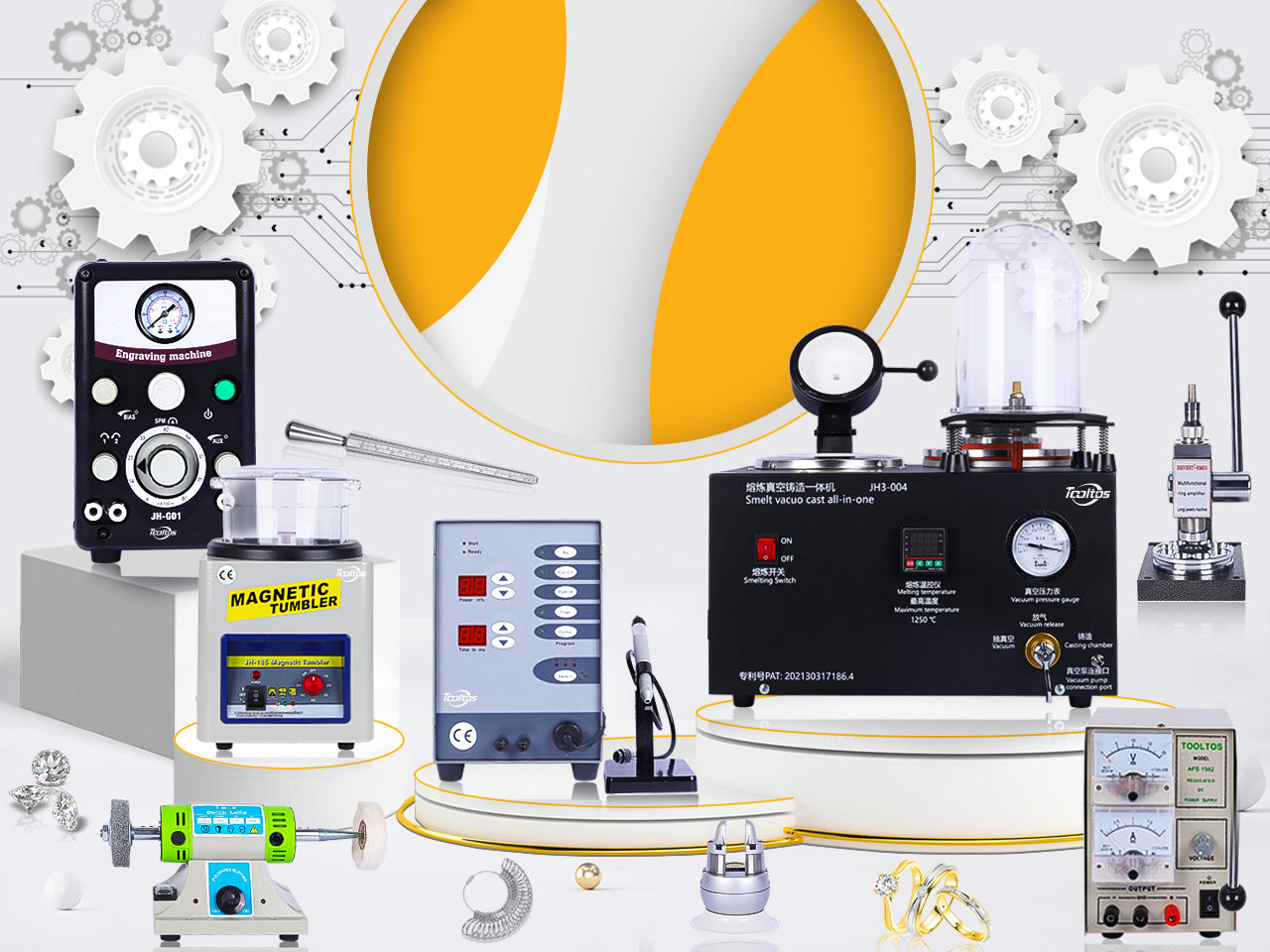
For example, the Tooltos JH-185 Magnetic Tumbler Jewelry Polishing Machine is designed around stainless-steel magnetic needles and a compact batch capacity. It is a logical match for a studio that wants to brighten detailed metal work in small, controlled loads. Start conservatively, use an appropriate liquid and burnishing compound, and check stone-set or especially delicate work frequently.
“The visible surfaces are fine, but the details are still dull.” — Choose magnetic finishing.
When a Rotary Tumbler Is the Practical Choice
A rotary tumbler works with a turning barrel. The load repeatedly rolls with the media, which makes it a familiar and approachable option for jewelers who need a dependable small-batch finishing step.
Rotary tumbling is often a good fit when you want a straightforward process for pieces that have already received sensible bench cleanup. It can help burnish and even the surface of robust rings, simple pendants, findings, and similar metal components—provided the selected media and load are appropriate for the design.
The advantage is workflow simplicity: load a small batch, run a controlled cycle, inspect, then decide whether the piece needs another pass or hand finishing. A compact option such as the Tooltos PG-085 Rotary Tumbler Polisher suits this kind of bench-scale routine, while larger rotary options can make sense as batch size rises.
“I need a reliable, repeatable finishing step for small batches.” — Choose a rotary tumbler.
When a Vibratory Tumbler Earns Its Bench Space
Vibratory tumblers move the work and media through a vibrating bowl instead of a rolling barrel. That action is useful when your priority is processing multiple pieces while keeping their overall geometry more intact than a more pronounced rolling action may allow.
They are especially helpful for routine deburring and surface finishing where consistency across a batch matters. The Tooltos polishing range includes compact vibratory options for smaller studios and larger bowls for higher-volume work, such as the Tooltos 8 inch Vibratory Tumbler Polisher and the Tooltos SP-P17 17 Inch Vibratory Tumbler Jewelry Polishing Machine.
Vibratory finishing is not a “set it and forget it” operation. Media choice, compound, water flow where applicable, batch composition, and run time all affect the result. Keep unlike finishes separated, avoid overloading, and inspect a sample during the cycle. A delicate item may need a gentler process—or a final hand-finish—rather than more machine time.
“I need a consistent finish across a larger batch without treating every piece as a one-off.” — Choose a vibratory tumbler.
Use the Finish Goal to Make the Decision
Rather than starting with machine capacity or price, begin with the finish problem in front of you.
1. Brightening Intricate Metal Surfaces
Start by considering a magnetic tumbler. Fine pins can work around detail, holes, and chain links where a polishing wheel or larger media has limited reach. This is often a finishing or pre-polishing step, not a remedy for deep filing marks, casting defects, or major scratches.
2. Burnishing a Manageable Small Batch
Consider a rotary tumbler. It can fit a studio that needs a controlled and repeatable process for sturdy pieces, provided the media is appropriate and the work is checked at intervals.
3. Deburring and Finishing a Repeated Production Batch
Consider a vibratory tumbler. Its bowl-based motion and broad media choices can support a more scalable finishing workflow. Select a size that reflects your actual batch, not your largest possible batch once a year.
4. Creating a True Mirror Finish on Presentation Surfaces
Do not expect a tumbler alone to solve every mirror-finish job. A piece may still need progressive sanding, controlled polishing compounds, careful cleanup, and a final hand or bench-polisher pass. Tumbling can improve consistency and reduce repetitive labor, but it cannot erase poor surface preparation.
Five Checks Before You Load a Batch
- Separate compatible work. Do not mix pieces with very different sizes, metals, finishes, or levels of fragility without testing. A robust casting and a delicate stone-set piece may not belong in the same cycle.
- Choose the media for the result. Ask whether you need cutting, deburring, burnishing, smoothing, drying, or a pre-polish. The machine type alone does not answer that question.
- Use a test piece first. A sample reveals whether the process is reaching recesses, softening edges, affecting a texture, or leaving a result that still needs hand work.
- Follow the loading and liquid guidance. Overloading or using the wrong amount of water or compound can reduce movement and make results unpredictable.
- Inspect, clean, and dry. Rinse away finishing residues, dry the piece carefully, and inspect it under good light before moving to the next step. Keep media and machine components clean according to the manufacturer’s instructions.
A Simple Buying Path for a Small Jewelry Studio
If you are just adding mechanized finishing to your bench, buy for the work you do every week.
- Mostly chain, small cast components, intricate pendants, and hard-to-reach detail? Start with a magnetic tumbler.
- Mostly simple rings, findings, and small batches of sturdy metal work? A rotary tumbler is a sensible foundation.
- Regular batches of similar pieces that need consistent deburring or surface finishing? Invest in a vibratory tumbler sized for your real throughput.
As your workflow grows, these machines can complement one another. A studio may use a magnetic tumbler for detailed brightening, a vibratory system for batch finishing, and bench polishing for the final presentation surfaces. The best setup is the one that removes your specific finishing bottleneck while keeping quality checks in the process.
Find the Right Finishing Setup
Explore Tooltos Jewelry Polishing and Finishing Equipment to compare magnetic tumblers, rotary tumblers, vibratory finishers, bench polishers, media, and accessories for your workflow. If you are unsure which capacity or process suits your pieces, contact the Tooltos team with the metal type, piece geometry, batch size, and the finish you want to achieve.
0 Kommentare