

Quick Answer
Clean the recess first so you can see the metal. If a file mark or scratch remains, smooth it with a suitable abrasive before polishing. If the surface is already smooth and you want more luster in the recess, a magnetic pin tumbler can help on suitable unmounted sterling silver. Keep intentionally darkened details out of any finishing process that could change the contrast.
Identify What Is Keeping the Recess Dark
Under angled light, rotate the dry piece and inspect it with magnification. Look at the bottom of the recess and the edges that define the design. A shadow moves as the light changes. A mark or deposit stays in the same place.
| What you see | What to do first |
|---|---|
| Visible compound or debris | Remove it with a cleaning method suitable for the piece, then dry and inspect again. |
| File marks or visible scratches | Choose an abrasive that fits the recess and can reach the mark while preserving the surrounding edges. |
| Smooth metal that needs more luster | Consider magnetic pin burnishing if the recess is open enough for the media to move through and exit freely. |
| Dark color that is part of the design | Preserve the contrast. Finish the raised areas separately using a controlled method. |
Remove Tool Marks Before Burnishing
Use a narrow abrasive point, sanding strip or other suitable hand-finishing tool that can reach the bottom of the recess. Use light pressure and work only as much of the surface as needed. Recheck under the same light as you refine the finish. On crisp lettering, engraved lines and sharp transitions, stop frequently to check that the profile is still intact.
Magnetic pins can brighten a surface they reach. Deep file marks need an abrasive step that removes the mark itself. If a recess comes out shinier and the same line is still visible, revisit the hand-finishing step before running another cycle.
Where a Magnetic Tumbler Fits
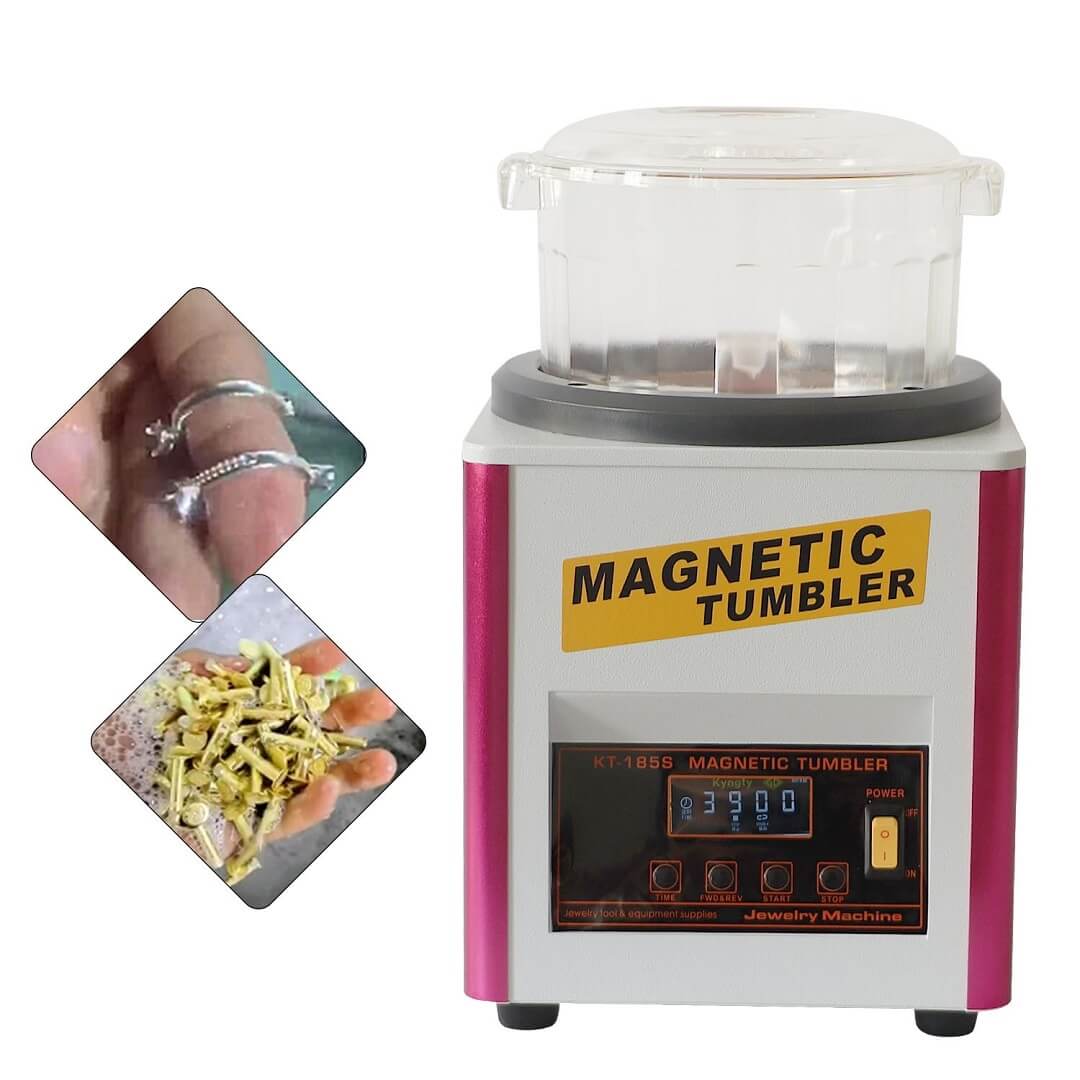
Consider magnetic burnishing for suitable unmounted sterling silver parts with open, accessible details. The pins must be able to enter, move and leave. Check blind holes, narrow slots and hollow sections before loading. If you cannot confirm that you can retrieve the media, finish that area by hand.

The KT-205A magnetic tumbler is one option to evaluate. When comparing magnetic tumblers for jewelry, check the bowl, recommended media and whether you can reliably separate the pins from your parts. See how magnetic tumblers work and our comparison of jewelry tumblers for more on equipment choice.

Check the Result Before Finishing the Rest of the Batch
Start with one suitable piece or a comparable spare and follow your machine and media instructions. After the cycle, separate the pins, rinse as appropriate and inspect the recesses under magnification. Compare the finish in the same light, check that the edges still look as intended, and confirm no pins remain. If the part has stones, plating, an intentional patina or an unfamiliar finish, confirm the finishing method before processing it.
Frequently Asked Questions
Can a magnetic tumbler remove deep scratches from sterling silver?
Use a suitable abrasive to remove deep scratches first. Magnetic burnishing can improve luster, but the scratch can remain visible even when the surrounding metal is brighter.
Why are my recessed details still dark after polishing?
Check for shadow, residue, tarnish or an intentional dark finish. If the metal is clean and smooth, look at whether your tool or media could reach the surface.
Can I use this process on a finished ring with a gemstone?
This workflow is for unmounted silver. For finished jewelry, check the stone, setting and surface treatment before choosing a cleaning or finishing method.
0 Kommentare