

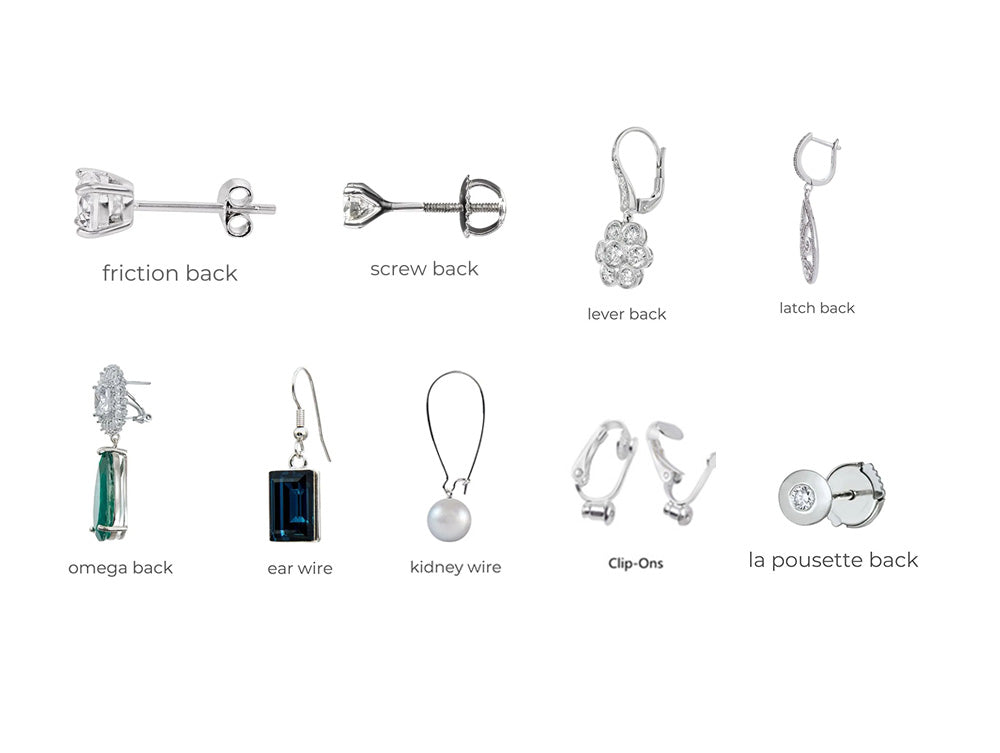
When it comes to earrings, the type of lock or backing used is just as important as the design itself. Earring locks ensure that your jewelry stays securely in place and also play a role in comfort and wearability. Whether you're a jeweler designing a new line or shopping for the perfect pair, understanding the types of earring locks helps you make the right choice.
1. Push Backs (Friction Backs)
How it works: A small clutch slides onto a straight post and holds the earring in place through friction.
| Pros | Easy to use, widely available, cost-effective |
| Cons | May loosen over time and fall off if not checked periodically |
| Best for | Stud earrings |
2. Screw Backs
How it works: The earring post is threaded, and the backing screws on for a more secure hold.
| Pros | Very secure, ideal for valuable earrings like diamond studs |
| Cons | Takes longer to put on and remove; not ideal for those with limited dexterity |
| Best for | Fine jewelry |
3. Lever Backs
How it works: The hook snaps into a levered closure, which securely clasps behind the earlobe.
| Pros | Secure and stylish; the closure is part of the earring design |
| Cons | May feel bulky for some; less adjustable than other types |
| Best for | Dangle and drop earrings |
4. Latch Backs (Hinged Backs)
How it works: A curved post latches into a small notch behind the earlobe.
| Pros | Comfortable and secure |
| Cons | The latch can wear out or misalign over time |
| Best for | Hoop earrings |
5. Omega Backs
How it works: A hinged clip resembling the Greek letter omega closes over the post to secure the earring.
| Pros | Elegant and secure; great for heavier earrings |
| Cons | Requires precise alignment; may pinch if too tight |
| Best for | Statement earrings and clip/post combo styles |
6. French Hooks (Ear Wires)
How it works: A simple wire hook goes through the ear and dangles freely without a back.
| Pros | Easy to wear; ideal for light earrings |
| Cons | Can fall out if not paired with a small rubber stopper |
| Best for | Bohemian, dangle, and artisan earrings |
7. Kidney Wires
How it works: A long wire hook loops back into itself, creating a closed shape like a kidney bean.
| Pros | Secure and stylish for lightweight earrings |
| Cons | Not suited for very heavy designs |
| Best for | Dangle earrings and handmade jewelry |
8. Clip-Ons
How it works: A hinged clip grips the earlobe without requiring a piercing.
| Pros | Great for those without pierced ears |
| Cons | Can become uncomfortable over long periods of wear |
| Best for | Costume jewelry and non-pierced designs |
9. Magnetic Backs
How it works: A magnet holds the earring in place on each side of the earlobe.
| Pros | Easy and pain-free for non-pierced ears |
| Cons | Not strong enough for heavier earrings; may slide or fall off |
| Best for | Lightweight fashion jewelry |
10. La Pousette Backs
How it works: A locking mechanism engages when the back is pushed onto the post, releasing only when the tabs are pinched.
| Pros | High-security option; great for valuable earrings |
| Cons | More expensive and less common |
| Best for | High-end fine jewelry |
Essential Tools for Making Earrings
Having the right tools makes all the difference when crafting French hooks, kidney wires, or jump ring connections:
- Wire Bending and Cutting Pliers — Essential for shaping ear wires, bending hooks, and trimming wire cleanly.
- Flat Nose Pliers — Perfect for gripping, straightening wire, and closing jump rings without leaving marks.
- Jump Ring Maker — Make consistent, perfectly sized jump rings for connecting earring components.
- Complete 8-Piece Jewelry Tool Kit — Ideal for beginners; includes pliers, scissors, and beading tools in one set.
Related Guides
Shop Earring Making Tools
Browse professional jewelry making tools at Tooltos. Contact us at sales@tooltos.com — we respond within 24 hours on business days.
0 comentarios